Quincy U Offers App-Based Personal Security Service
- By Dian Schaffhauser
- 07/19/12
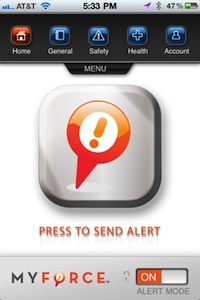
MyForce on an iOS device |
Quincy University has begun offering students at its Illinois campus an option to subscribe to a security service that will listen in on their interactions and track their location in case help is needed.
MyForce, offered by a company of the same name, is a personal security service delivered through a smart phone app. The service costs $11.99 per month or $99.99 per year (a discount off the regular price of $119.99 annually) and runs on Apple iPhone, Google Android, and RIM BlackBerry devices.
Users subscribe and then register at the company's site, providing name, address, vehicle information, a photograph, medical history, emergency contacts, and specific safety concerns. Once the app is installed on the mobile device, if the user becomes worried or expects trouble in a situation, he or she pushes a button on the screen, which notifies MyForce staff to listen to and record audio. The student doesn't have to speak at all. His or her location is fixed through the smart phone GPS.
Should help be needed, the MyForce service contacts local police and also relays incident information to the university's public safety security officers, "allowing us to respond with precision and speed," the university informed its community when announcing the service.
MyForce isn't limited to getting help just on campus. When a student is traveling, it's also available wherever the mobile phone works within the United States.
About the Author
Dian Schaffhauser is a former senior contributing editor for 1105 Media's education publications THE Journal, Campus Technology and Spaces4Learning.