
Georgetown University is expanding its efforts with Google Cloud to improve the institution's ever-expanding data needs and facilitate interdisciplinary collaboration.

Indiana University's Research Technologies center has received $1.3 million from the National Science Foundation to fund operations for the Jetstream research computing cloud through 2020.
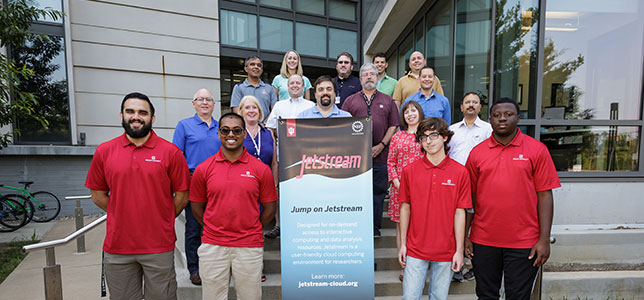
Indiana University led the creation of an on-demand cloud platform that extends scientific and research computing resources to more higher education communities.

Dartmouth University has joined the Aristotle Cloud Federation, the federated cloud-based research computing project established by Cornell University and its partners, the University at Buffalo and the University of California, Santa Barbara.

North Carolina State University is joining the IBM Q Network, a collaboration of companies, academic institutions and national research labs working to advance quantum computing, making it the first university-based IBM Q Hub in North America.
A research and education network in New Jersey has signed a deal with Amazon to offer that company's web services to its members at reduced prices. Institutions, schools and districts that are members of N.J. Edge will be able to connect directly through the state's fiber connections run by N.J. Edge or create new ones through AWS Direct Connect, putting them, "one hop away" from Amazon's web services, according to N.J. Edge C.E.O. and President Samuel Conn.
The educational work involves more than the use of computational time and storage. Projects can also include in-class, interactive exercises and assignments, workshops, longer "institutes," semester courses and support of internships and fellowships.
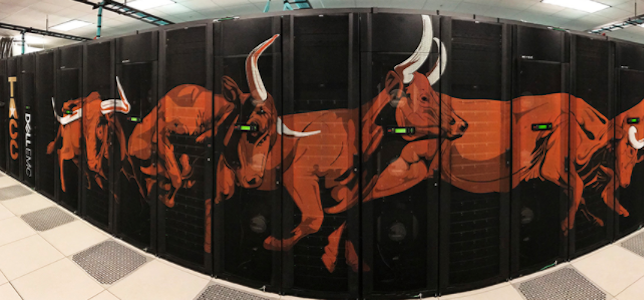
The University of Texas at Austin now runs the most powerful supercomputer at any higher education institution in the country, and researchers nationwide can tap its processing power for small- and large-scale data analysis.
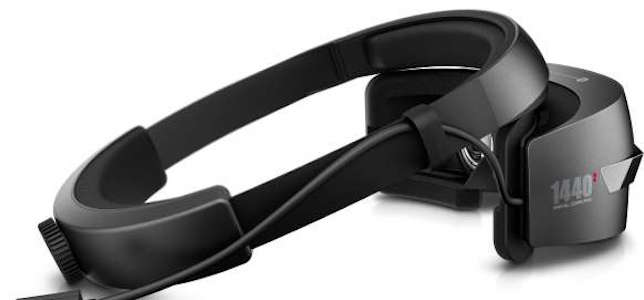
Microsoft finally introduced two mixed reality (MR) branded headsets (in developer editions) this week in the Microsoft Store.
The University of Texas at Austin recently introduced its newest supercomputer. Stampede2, as it's called, is intended to serve as the flagship at the Texas Advanced Computing Center (TACC) and will be available to tens of thousands of researchers across the country.