BASU to Hand Out Free Alarms to College Students

BASU, a company that manufactures portable safety devices, is handing out its eAlarm for free to full- and part-time college students ahead of the upcoming academic school year.
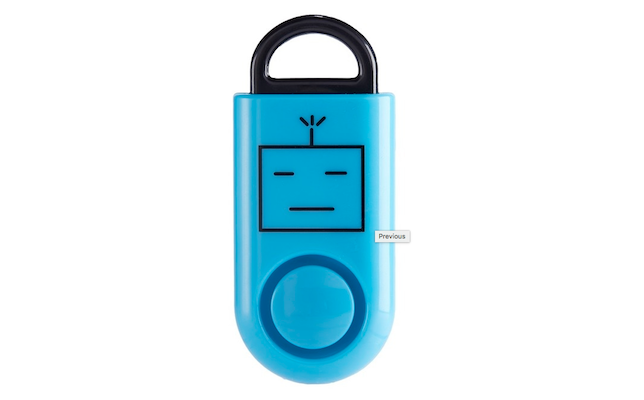
Image: BASU.

The pocket-sized personal safety device, dubbed the “sound grenade,” emits a whopping 120-decibel sound that is designed to fend off attackers (including bears). It works by simply detaching the plug from the top of the device; the sounds last until the top plug is secured back in place.

The eAlarm comes with two pre-installed CR1632 batteries that last for 30 minutes of continuous alarm use, or up to five years. The batteries must be repurchased afterwards, but the good news is the device only consumes battery life when the alarm is “on” (plug is removed).

Normally retailing at $15.99 plus shipping, the eAlarm is available in five colors and comes with a metal carabiner clip to attach the device to pant pockets or elsewhere.

Other technical specifications include:

  • Measurements: 2.79 inches x 1.22 inches x 0.51 inches;
  • Weight: Less than 1 ounce; and
  • TSA approved.

Individuals must be currently enrolled in a college or university in the United States or Canada to redeem a free eAlarm.

To learn more about the product, watch the video below.

About the Author

Sri Ravipati is Web producer for THE Journal and Campus Technology. She can be reached at [email protected].

Featured

  • digital brain with network connections

    Microsoft Moving to Internally Developed AI Models in Office Apps

    Microsoft is reportedly using its own in-house artificial intelligence models to handle some workloads in Excel and Outlook, offering new evidence that the company is moving its AI strategy beyond model development and into large-scale cost reduction.

  • digital data protection and cyber security

    White House Launches New AI Security Framework

    President Donald Trump has issued a new executive order aimed at maintaining United States AI leadership while addressing the security risks posed by increasingly powerful AI systems.

  • scientist using digital interface

    Anthropic, NVIDIA Move AI Agents Deeper into Scientific Workflows

    Anthropic has introduced Claude Science, a new AI workbench for scientists that integrates research tools, produces auditable artifacts, and connects to specialized life sciences models and workflows from NVIDIA.

  • Silhouettes of business professionals stand against a blurred futuristic city skyline at night, with a glowing digital network data connection

    It's Time for Higher Ed to Get Serious About AI Strategy

    Without a coordinated strategy that involves multiple academic and administrative units across the entire campus, colleges risk wasting resources, duplicating efforts, and ultimately failing to deliver on the promise of deploying technology to improve learning and operations.