In an effort to provide a more inclusive learning environment for students, the Utah Education Network has partnered with Blackboard to roll out the company's Ally product at nine universities across the state. Ally integrates with an institution's learning management system and automatically checks course materials for common accessibility issues.

Following a semester-long pilot of Blackboard's Ally solution for accessible course content, the University of California, Berkeley is expanding its use of the technology across campus. The rollout will begin this fall, and by the end of next year, the system will provide accessible course materials to more than 40,000 undergraduate and graduate students, according to a news release.

Of an estimated 32 million children around the world who are deaf, hard of hearing or deaf-blind, four in five lack access to education, and just 2 percent get instruction in sign language. Because early exposure to sign language builds a stronger language foundation, those without it are affected in education, employment and social interaction.

Tulane University is simplifying the process of captioning its video and audio content. The institution worked with video management provider ShareStream to launch a new closed-captioning service that has been integrated into the ShareStream Video Platform.

Microsoft has unveiled new updates to improve accessibility and inclusivity across a range of education tools.
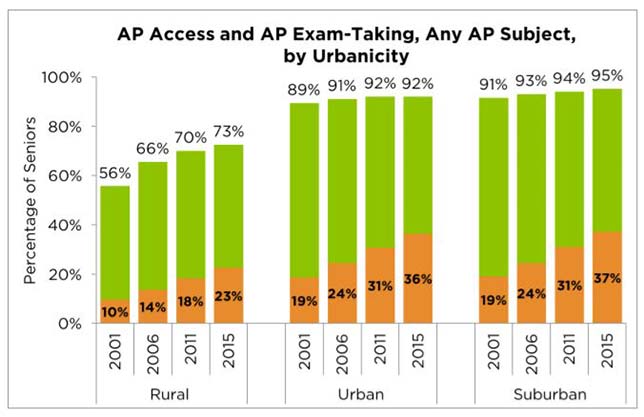
A new assessment has found that students in rural areas are rapidly catching up on Advanced Placement (AP) testing compared to their urban and suburban peers.

A project at Penn State World Campus immersed teachers into a virtual classroom as part of a graduate-level special education course. Students could use a virtual reality headset to watch 360-degree videos or view them as regular videos on YouTube.
Feedback is trickling in on the U.S. Department of Education's new website dedicated to the Individuals with Disabilities Education Act (IDEA). Since February, the site has been undergoing a redesign, based at least in part on comments from 130 people who provided feedback during the design process. The new site went live June 1.

The city of Boston and the state of Massachusetts have expanded their respective free college programs and teamed up to encourage eligible students to take advantage of the "bridge" they want to build between high school and college completion.

Steve Hargadon wants a revolution in education. He is the founder and director of the Learning Revolution Project, a social networking website for educators, as well as a vehicle for online and in-person educational conferences. During the ISTE conference in San Antonio, TX, Hargadon will present at three sessions.