Why ePortfolio is the Tool of the Time and Who is Enaaeebling It

As a writing teacher--so, no, the title is not misspelled--who used portfolios in teaching, who served as Chair of the Board of the Mellon-funded Open Source Portfolio Initiative (now part of Sakai), who was an academic computing director involved with rolling out an ePortfolio system, and who is now executive director of the ePortfolio professional association, AAEEBL, I've very obviously hooked my wagon to the set of learning and assessment practices associated with ePortfolios. Now, with over half of all American institutions of higher learning using ePortfolios in one way or another, according to Casey Green's Campus Computing 2008 national survey (www.campuscomputing.net), I could feel my career goal has been met. But, I don't.

Three Kinds of ePortfolio Tools Needed; Two to Go

Why hasn't my portfolio career goal been met? One particular part of ePortfolios has been built out--the part we call assessment management, the institutionally owned reporting process, tracking the progress of student cohorts toward program learning goals. But other parts have not been built out, so the eventual ideal structure of the ePortfolio enterprise is missing really important enabling software applications. For simplicity, let's say there are three main sets of requirements for the ePortfolio stack, as shown below.
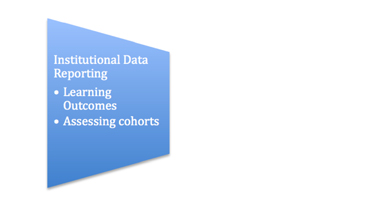


                  --85 percent of the market



                  --About 15 percent



                  --Doesn't exist


The Myth of One Platform

Each of these parts of the ePortfolio stack has distinct and largely incompatible requirements. But, the problem is that both vendors and education clients believe these three can be and should be incorporated into one platform. For a number of reasons, including technical ones, this is impossible. The ePortfolio enterprise in the world is stuck with an unworkable belief. Perhaps people believe that since a CMS (or an LMS) is just one app, so an ePortfolio should be.

But this belief makes no sense. There are many purposes for ePortfolios, not just one, and we must have ePortfolio offerings in the three parts of the portfolio stack in order to create better opportunities for full-spectrum learning: authentic, experiential, and evidence-based. Authentic means real-life, doing the actual work, learning-on-the-job, apprenticeship, and so on. This kind of learning requires either the student portfolio, which is in short supply and underdeveloped; or the life-long personal portfolio, which doesn't exist, at least not in the form that people would purchase. At this point, you can show evidence of authentic learning in your ePorfolio only if you are enrolled in a course. In a knowledge culture, this makes no sense. Experiential means doing something that leads to learning, such as service learning--not directly related to a syllabus but often very important for developing the whole person. This part also requires a really good student ePortfolio. Evidence-based means two things: First, evidence must be collected anywhere and, secondly, evidence should be able to find its way to the institutionally owned assessment management system designed for the assessment philosophy of the institution while a person is enrolled in a formal learning program.

Work done outside the classroom, out in real life where learning is happening all the time, can be captured and made visible to present a fuller picture of the learner, not just through the lens of a particular syllabus, but through the panorama of life. Collecting evidence of this work requires the personal, life-long portfolio, the part that doesn't exist yet.

Enter the New ePortfolio Professional Association

We in AAEEBL are encouraged by the ePortfolio work underway in the U.S., Europe, and Australia/New Zealand, but can also see how far we still have to go. [Editor's note: You can see an AAEEBL/EPAC Webcast Thursday May 21, noon Eastern Time, at http://epac.pbworks.com]

We are inspired by many shining examples of good work: at Evergreen College in Washington, at Charleston University in West Virginia, and at anumber of other well-known ePortfolio programs such as Alverno's andLaGuardia's, the University of Michigan cluster of implementations, Indiana University's ground-breaking implementations, the many examples from medical education including that of Case Western Reserve University's new MedicalSchool, the Virginia Tech story, the Ohio Learning Network, Rhode Island's entire K-12 system requiring student use of ePortfolios, the MnSCU and Cal State statewide efforts, the Johns Hopkins story, the impressive portfolio syllabus integration at George Mason's New Century College, portfolios at Queeensland University of Technology in Brisbane, and so on. But, out of the 2,000-plus U.S. institutions using ePortfolios now, we might find only 100 programs where ePortfolio has been implemented with impact on teaching and learning. That's 5 percent. And even those programs are, in many cases, looking for technology improvements.

Therefore, despite these shining examples, the promise of ePortfolios is still a distant glimmer. This is why we have formed a new professional association. One hundred leaders in the ePortfolio world have worked for two years to create AAEEBL, which is affiliated with EPAC, TheInter/National Coalition for Electronic Portfolio Research, IMS Global Learning Consortium, The TLT Group, Helen Barrett's www.electronicportfolios.org, The Association of American Colleges and Universities, and the LaGuardia Community College's ePortfolio initiatives. [See the AAEEBL site (www.aaeebl.org) for more info and links to these affiliated organizations.]

AAEEBL's Purpose

AAEEBL's mission is to bring the fledgling ePortfolio movement toward greater fulfillment of its potential. Current ePortfolio technology offerings are heavily weighted toward the institutional end of the spectrum. AAEEBL will work to galvanize the vendor-educator ePortfolio community to create a broader array of offerings and implementations.


Comments

Thu, Jun 25, 2009 Brian Rembrandt Santa Fe, New Mexico

Dear Trent: Thanks for the interesting article on the status of ePortfolio. I am proud to say that I just finished a year long beta test of an ePortfolio solution that solves the problems you mention in your article. I just presented my work at the Higher Learning Commission Annual Meeting in Chicago. My name is Brian Rembrandt. I was a faculty member for 5 years at a small art school in Santa Fe, New Mexico. I taught graphic design and web development in the New Media Department. I just completed my last semester teaching. I have been a graphic designer and a new media developer for 20 years. My background is largely in corporate communication. I taught part time at the Institute for 5 years, while running my design / web development business. I was in the unique position, as a faculty member and design professional, to be able to see the project from a variety of vantage points. My approach to our successful ePortfolio was to create an assessment tool that was easy for faculty and a portfolio tool that behaved like a social network, like MySpace or Facebook. We rolled the project out slowly and encouraged the students to have fun with it and post coursework, not only associated with specific courses, but any work related to their college experience. Originally the project focused on creating a web based platform that rivaled social interactions popular on the Internet. Our goal was to keep it fun and engaging for the students. After succeeding with this, we added a simple to use assessment system to the project. The assessment functionality is powerful, but not a burden on faculty. Faculty training will begin Fall of 2009. The software that I used for the project is all open source. I used Joomla, a popular CMS and a variety of components and add ons. I researched all available options before we started developing. My research started while attending the 2008 Assessment Institute conference in Indianapolis. I explored all available options and found, as you stated in your article, that none offered all necessary components needed for a robust, mature solution. I returned back to New Mexico ready to meet the challenge of creating a solution that offered elements needed for assessment and ePortfolio. I am proud to say that it works! For more information please feel to contact me. I am happy to share the results of our work. We will be out of Beta this coming Fall.

Fri, Jun 5, 2009 Ray Tolley UK

Trent, I admire your enthusiasm for clear thinking about e-Portfolio practice and then you go and confuse everything by demanding that the e-Portfolio should be bound in to the IMS and assessment tools of the VLE (or Learning Platform). As I have said elsewhere, "Let the VLE do what it does best and leave the e-Portfolio to do what it can best do." So, removing all institutional tools from the e-Portfolio leaves adequate opportunity to develop (1) ownership, (2) Lifelong Learning and (3) Lifewide Learning. Each of these points requires a full essay and may thus be beyond the scope of this comment. However, I must comment on your observations of the eFolio model. It certainly meets all my criteria, I most certainly agree with Kat's comments about e-Folio. One point that is not usually mentioned when discussing DIY or Cloud Computing models is that of IMS compatibility - the eFolio system addresses these issues with pages correctly set up for Career Objectives, Employment, Qualifications etc etc. Please look at my own eFolio - comments back to me are most welcome: http://raytolley.v2efolioworld.mnscu.edu/

Sat, May 30, 2009 Trent Batson RI

Dear Kat at Mesabi Community College: Yes, I'm aware of eFolio. Minnesota is far ahead of the rest of the U. S. in portfolio thinking. In other parts of the world, a life-long portfolio is provided for citizens -- Wales and Scotland are examples. If eFolio is aimed at people from anywhere in the world, and can share data with any assessment management system at any institution of learning in the world, and is multi-linqual, then I guess we have it. But, my understanding is that eFolio is for citizens of Minnesota as long as eFolio is adopted everywhere. And I know that the U and MnSCU are working on transportability across both systems, so eFolio may serve most citizens in your State. But, my point stands. Thanks for your comments. Trent

Thu, May 28, 2009 Kat Mesabi Community College

"Work done outside the classroom, out in real life where learning is happening all the time, can be captured and made visible to present a fuller picture of the learner, not just through the lens of a particular syllabus, but through the panorama of life. Collecting evidence of this work requires the personal, life-long portfolio, the part that doesn't exist yet." I believe what you're talking about does exist. I work on an eFolio Minnesota pilot project with a career focus. I am not an ePortfolio expert, but I am an Internet marketer who is active in many social networks, social media, SEO, SEM, etc. Our project targets various market segments such as K-12, higher ed, Career seekers, workforce and business and industry. So, a lifelong learning tool DOES exist and ours is not the only one, either. In today's world, there is not ONE platform that will solve everything. I personally own an eFolio, I'm active on LinkedIn, Facebook, Twitter and blog for three different web sites. Even with an e-portfolio--which is essentially a web site that provides a structural platform for adding multi-media content to showcase learning, experience, work samples, evidence of learning, etc., one is not truly 'connected' unless he or she USES multiple channels to display knowledge and networks for career or education purposes. One doesn't need an 'eportfolio' to capture lifelong learning evidence; a wordpress blog allows anyone to upload video, PDFs, Word docs, photos, whatever. So, to the claim of 'Student Portfolio, no institutional tie (meaning the individual portfolio is owned by the institution), truly portable-DOESN"T EXIST' is simply incorrect. Maybe we could say that people aren't using technological resources available to archive their lifelong achievements and learning? Maybe we can say that some people just aren't calling such a tool a portfolio? eFolio Minnesota, while it is a MNSCU product, is a statewide portfolio available to everyone in the state for FREE and the owner-the user-can keep it FOREVER-regardless of which institution uses the tool, regardless of when it began, regardless of how it transforms. But having a portfolio or a web site without giving it a PURPOSE, is well, useless. If an eportfolio has URL, allows ownership, and has a CMS, then it's sharable and portable and can be lifelong! If an ePortfolio has the freedom of adding HTML, then it can be tied to any social network--as is eFolio. I believe It is the combination of tools that can display EVIDENCE of learning, of self-expression, of skills and capabilities.

Wed, May 27, 2009 Trent Batson RI

I'm a bit surprised by the strong words in the comments about this article. We are setting up AAEEBL to represent all ePortfolio efforts and have no intention of dictating. However, it will help us all if we have consensus about what is an ePortfolio tool (assessment management all the way to online resumes claim to be "ePorfolios," for exmaple), about what learning traits we hope will results, and about what we all hope to see in terms of technology offerings down the road. If the article seemed unduly tendentious, I apologize, since that was not my purpose. Actually, I hope everyone who commented will join AAEEBL because we need all the voices we can get. Thanks for writing, everyone.

Fri, May 22, 2009 Ray Tolley UK

I find the arrogance of a number of HE students quite amazing - if not downright offensive. The mentality of the last two unnamed comments is typical. Who ever said that the e-Portfolio should be the sole prerogative of HE students? The simple logic of Lifelong, Lifewide learning is that ALL learners should have an e-Portfolio that ‘matures’ with them. For some time I had used the strap-line: ‘for all, 5-95’ until one reader commented that even pre-school children need an e-Portfolio, even if managed by parents, care-staff or social workers. And this reminded me of Helen Barrett’s suggestion of setting up an e-Portfolio at the birth of a child – and there are many benefits of doing this!

However, as I have mentioned in my own blog more than once, the failure of institutions to organise their own VLEs properly and to use assessment tools properly linked to their MIS is no reason to overload an e-Portfolio with institutionally designed tools which are of no use either before or after one’s short life in HE.

It’s about time that people realised that the e-Portfolio serves a far wider purpose than the narrow use of assessment tools. Here in the UK our 14-19 (VET) students often attend two or three differing institutions who may all have different VLEs and several workplaces who may have none. The e-Portfolio, therefore, MUST be hosted externally to any individual institution and remain under the ownership of the learner as and when able to.

Furthermore, the e-Portfolio should be capable of presenting different ‘faces’ to different audiences. In terms of e-Safety, the e-Portfolio should also be capable of providing secure collaborative/group/polling/questionnaire facilities which perhaps the unthoughtful HE students have not thought through. I've tried to address several of these issues in my blog at: www.efoliointheuk.blogspot.com

Thu, May 21, 2009 Regretful School of Hard Knocks

The concept of a unified pk-20+ e-portfolio that is being pushed by many state level ideologues is simply untenable. Costs are too high, buy-in by most parties including students is too weak and concerns regarding security and privacy too strong. Beware of Open Source systems like Sakai/OSP that lure high level administrators to believe that they are affordable while the reality is that they are hardware black holes that consume budgets and resources at a staggering rate and drive TCO beyond fiscal responsibility. Commercial applications are equally expensive but at least offer support and don’t represent themselves in a Pollyanna manner like Sakai does.

Thu, May 21, 2009

Wow! Someone who is even more cynical than me!! It seems to me that associations are always started by "self-proclaimed experts"--who else is willing to take the time and make the effort to promote what they are passionate about? If you don't agree with the direction an association is moving (but can agree with the basic tenants of that organization, i.e. promote eportfolio development) then join and work to steer it in the direction you'd like to see it move. If most others don't agree with your viewpoint, then perhaps your view is wrong! I don't agree with everything Trent said in his article, but much of his discourse parallels what I have seen in my eportfolio experiences. Higher Ed. institutions tend to favor that which produces hard statistical evidence that can be used to "prove" that what they are doing is the right thing to be doing, and so assessment management is the first area of concentration for many (most?) institutions. But there are other areas to consider also, areas that many feel are at least as important as assessment management. The conversation has been going on for years; don't lurk outside the dialogue and then complain when it doesn't go your way!

Thu, May 21, 2009

I don't appreciate having this organization self-righteously telling us the TRUE purposes of ePortfolios. They are the dictatorship of the proletariate, setting themselves up as self-proclaimed experts. Some of them have gone from one position to another, always seeking national exposure. Meanwhile, some of us have been using very functional ePortfolio systems for many years, but since we do not seek the limelight of public acclaim, but simply prefer to enhance the learning of our students, we have missed out on the framing of the conversation. We have an extensive amount of student reflection taking place. We have whole portfolio assessment, also, but the core of our enterprise is the direct assessment of student learning. We refuse these efforts to make us feel guilty because we are about assessment more than the touchy-feely aspects of ePortfolios. In terms of ownership, Facebook and other social networking sites do a better job of helping students express themselves than any eportfolio system can ever hope to do.

Add your Comment

Your Name:(optional)
Your Email:(optional)
Your Location:(optional)
Comment:
Please type the letters/numbers you see above