Maple T.A. 6 Adds Moodle Support

Maplesoft has announced the release of Maple T.A. 6, the newest version of its Maple T.A. testing and assessment software.

Maple T.A is a Web-based system tailored to academic applications in math and engineering, featuring direct user entry of conventional mathematical expressions and graph plotting. The software includes modules for assessment, placement testing, and assessment question generation.

New features in Maple T.A. 6 include faster database performance, enhanced question content management, and support for menu, message, and text display in languages other than English.
Maplesoft, maple t.a., moodle assessment, maple assessment, school technology, campus technology, educational technology, technology in k-12 education

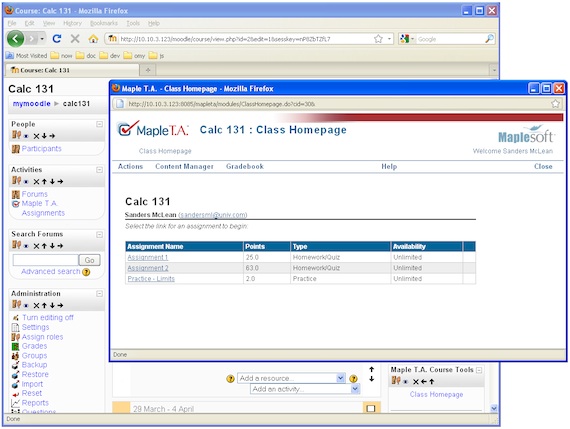
The new release also allows access to Maple T.A. authentication and assessment functionality from Moodle, along with the export of results data to the Moodle grade book. As with previous versions, the Maple T.A. connector for Blackboard is usable with this release.

More details can be found here.

About the Author

Evan Tassistro is a freelance writer based in San Diego, CA.

Featured

  • abstract colored blocks

    OpenAI Drops Sora Short-Form AI Video Platform

    OpenAI is reportedly dropping Sora, its generative AI model that creates short video clips from text prompts, images, or existing video inputs. The move upends the company's December partnership with The Walt Disney Company.

  • digital lock on a virtual background

    Encryptionless Extortion on the Rise as Ransomware Groups Shift Tactics

    Ransomware attacks continued to climb in 2025 as attackers increasingly timed operations around year-end staffing gaps and shifted away from traditional file encryption, according to new research from NordStellar.

  • glowing brain above stacked coins

    The Higher Ed Playbook for AI Affordability

    Fulfilling the promise of AI in higher education does not require massive budgets or radical reinvention. By leveraging existing infrastructure, embracing edge and localized AI, collaborating across institutions, and embedding AI thoughtfully across the enterprise, universities can move from experimentation to impact.

  • A man stands at the threshold of a wide open door, looking outward into a glowing, abstract digital landscape filled with light and network‑like patterns

    Shadow AI Isn't a Threat: It's a Signal

    Unofficial AI use on campus reveals more about institutional gaps than misbehavior.