3D Printer Project Gets MacArthur Funding
- By Dian Schaffhauser
- 05/26/10
Credit: Fab@School |
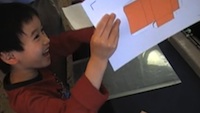
A project out of the University of Virginia to get young children comfortable with engineering has been selected as one of 10 winners in a MacArthur Digital Media and Learning Competition. The project, called Fab@School, is intended to teach K-12 students about mathematical analysis and modeling, digital fabrication, and engineering by allowing them to fabricate 3D copies of objects that they've designed themselves. The win comes with a $185,000 fund, which will be used to bring three-dimensional printers to public elementary school classrooms.
Glen Bull, a professor of instructional technology for U Virginia's Curry School of Education, spearheads the project, which also involves several collaborators: the Society for Information Technology and Teacher Education; the Hofstra University Center for Technological Literacy in Hempstead, NY: the Software MacKiev Co.; FableVision Learning; and Cornell University.
Cornell developed a program titled Fab@Home through its Computational Synthesis Lab, which is building the printers. The printers, which allow students to make 3D objects from their desktop, work with a number of kid-friendly materials, including Play-Doh, cookie dough, and chocolate, as well as polymers and metals. These printers read an electronic blueprint, designed by the children, and then a nozzle, filled with appropriate materials, builds a replica. Cornell publishes instructions for building the printers, which have an open source design, on its Fab@Home wiki.
Using a 3D printer, the students at the Cayuga Heights Elementary School in Ithaca, NY made a small space shuttle from two colors of Play-Doh.
"The power of the fab lab for me is seeing what the kids can do to deconstruct a figure, co-construct a figure--because I'm really encouraging them to talk to one another as they're working with the model-maker software--and then to reconstruct the figure or whatever it is they're doing," said Paula White, another teacher using the special equipment. White teaches Crozet Elementary School in Virginia.
"Ultimately what we really want is to have a personal fabricator in every classroom, just like there is a personal computer in every classroom," said Hod Lipson, an associate professor of engineering at Cornell.
The Macarthur grant will allow the Fab@Home project team to design and build five more printers appropriate for use in elementary school classrooms. The project also includes development by Fab@School of an open source library for sharing and disseminating digital designs, lessons, and activities that support digital fabrication in schools.
The Competition is funded by a MacArthur grant to the University of California, Irvine and to Duke University and is administered by the Humanities, Arts, Science and Technology Advanced Collaboratory.
About the Author
Dian Schaffhauser is a former senior contributing editor for 1105 Media's education publications THE Journal, Campus Technology and Spaces4Learning.