Casio To Rev Hybrid Laser/LED Projectors
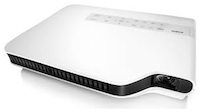
Casio's Slim projectors weigh 5 pounds and measure 1.7 inches in height. |
Casio this week reported it's revamping its lineup of highly mobile projectors that use a hybrid light source based on lasers and LEDs.
Casio said it will release six new models in the DLP-based Slim line, which consists of models that weigh in at 5 pounds and measure 1.7 inches in height. The models' lamp-free hybrid LED/laser light source has an expected lamp life of 20,0000 hours. The new models--which will include the XJ-A141, XJ-A146, XJ-A241, XJ-A246, XJ-A251, and XJ-A256--will offer enhancements like a built-in light sensor, continuous automated brightness control, an economy mode, and new wireless presentation capabilities.
The XJ-A141 offers a resolution of 1,024 x 768 (XGA), a contrast ratio of 1,800:1, and a brightness of 2,500 lumens. The XJ-A146 is identical to the A141 but also includes USB and wireless presentation capabilities.
In the middle range are the XJ-A241 and XJ-A246, which offer WXGA resolution (1,280 x 800), a brightness of 2,500 lumens, and a contrast ratio of 1,800:1. The XJ-A246 also includes USB and integrated wireless capabilities.
And on the high end are the XJ-A251 and and XJ-A256, which offer WXGA resolution, a brightness of 3,000 lumens, and a contrast ratio of 1,800:1. The XJ-A256 also offers USB-based connectivity and wireless presentation features.
Other features on the new models include:
- 2x optical zoom;
- Integrated 1 watt speaker;
- ±30 degree manual vertical keystone correction (+30 degree auto keystone correction);
- MobiShow, a presentation tool compatible with iOS, Windows Mobile, and Android operating systems for wireless presentations, with support for wireless presentation via Mac OS X-based systems on the XJ-A146, XJ-A246, and XJ-A256; and
- A built-in presentation timer on the XJ-A146, XJ-A246, and XJ-A256.
AV inputs on all of the new models include HDMI, RGB/component (mini D-sub 15-pin), and composite video. A single stereo minijack is shared for audio input and output (and composite video). The models also include an integrated 1 watt speaker.
Casio has not announced a specific ship date or individual pricing for the new models but said the they will range from $999.99 to $1,499.99. All of the models will come with a three-year parts and labor warranty and three-year/6,000-hour warranty on the light source. Additional details will be available on Casio's projector portal.