Berkeley Pushes Student Stats Apps to Phoenix NAP Cloud
- By Dian Schaffhauser
- 07/07/14
An academic department at the University of California Berkeley has shifted to a cloud solution in order to give students virtual access to statistical applications. The Department of Statistics adopted the use of Phoenix NAP Cloud Services in the spring 2014 semester in order to reduce the amount of time faculty had to spend helping students run the same software directly on their devices. The new approach allows users to access stats applications such as IPython and R remotely in a desktop session from their own computer instead of grappling with the software downloads, patches and plug-ins necessary for running the software locally. Or students can choose to use departmental computers.
"We looked at some of the larger vendors, but no one was able to provide us with the flexibility and support we needed to provision servers in the cloud, while working within the constraints of the campus' financial system," said Systems Manager Ryan Lovett.
| |
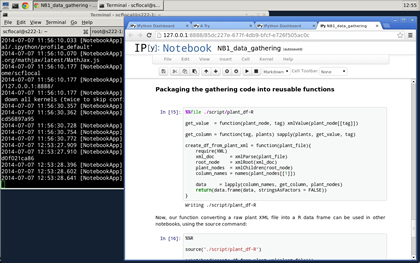
A sample remote desktop session with an IPython notebook running shows how most students in Berkeley's Department of Statistics interact with the virtual machines. |
|
That included the ability of the company to accept a university purchase order, he added. "From Phoenix NAP's cloud solution to its customer support right on down to its billing department, we've received the best experience as we provide a better learning environment for both professors and students."
The company's public cloud service allows organizations to run applications for multiple users on an as-needed basis; the customer pays for resources used. The feature set includes a dashboard summary to display an overview of resources used, virtual machine setup and management, network storage and firewall functionality.
About the Author
Dian Schaffhauser is a former senior contributing editor for 1105 Media's education publications THE Journal, Campus Technology and Spaces4Learning.