Creators of Second Life Open Sansar Social VR Platform to the Public
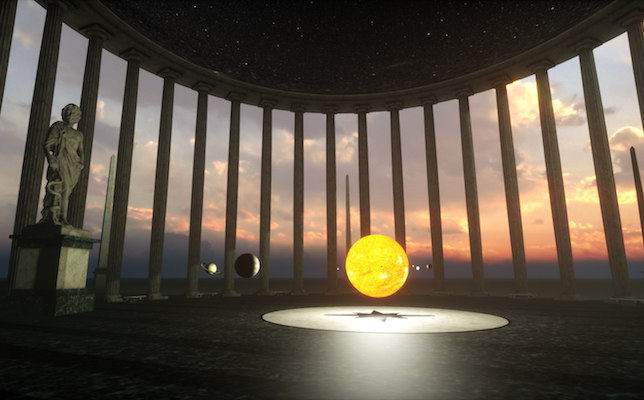
Images and video courtsey of Linden Labs.
The San Francisco-based company behind the social virtual reality (VR) platform Second Life has launched a creator beta for Sansar.
According to the announcement from Linden Lab, “Sansar empowers individuals, communities, schools, studios, corporations, brands and others to easily create, share and ultimately sell immersive 3D social experiences for consumers to enjoy on HTC Vive, Oculus Rift and Windows PCs.” All creators can now use Sansar’s platform to start creating VR content.
"Sansar democratizes social VR," said Ebbe Altberg, Linden Lab CEO, in the statement. "Until now, complexity and cost has limited who could create and publish in this medium, and Sansar dramatically changes that. It's been inspiring to see the thousands of virtual creations that have already published with Sansar during our limited preview, and I'm looking forward to the explosion of creativity we'll see now that we’ve opened the doors in beta.”
Key features of the platform include:
- Drag-and-drop editor;
- Cross-device distribution, with links to share content via Facebook, Twitter, e-mail, blogs and more;
- Multi-user experiences that support more than 35 concurrent avatars;
- Integration with Speech Graphics to provide accurate avatar lip-synching and facial animations;
- Optional support for hand controllers with an integration to iKinema’s kinematics technology; and
- The Sansar Store, which offers common 3D modeling tools, like ones from TurboSquid.
The platform initially opened with hundreds of VR experiences from creators who were invited to use the platform during a limited-access preview. Examples include:
(To access any of these experiences via desktop, Sansar requires Windows 7 SP1 or newer. See the system requirements for more information.)
Sansar is free to use and available now in creator beta as Sansar.com.
To learn about more Sansar’s creator beta, watch the video below.
About the Author
Sri Ravipati is Web producer for THE Journal and Campus Technology. She can be reached at [email protected].