New Tech Tests Usability of Virtual Apps
- By Dian Schaffhauser
- 05/29/19
A researcher in Germany has developed technology for automatically detecting the usability and user-friendliness of virtual environments. Previously, said Patrick Harms from the Institute of Computer Science at the University of Göttingen, the only way to check these aspects of virtual reality and the virtual world was through manual testing. Harms wrote about his results in the May 2019 issue of ACM Transactions on Computer-Human Interaction.
Source: Patrick Harms
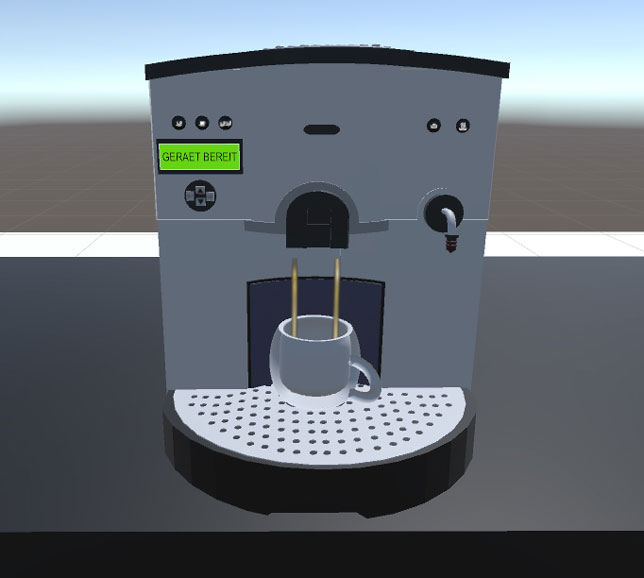
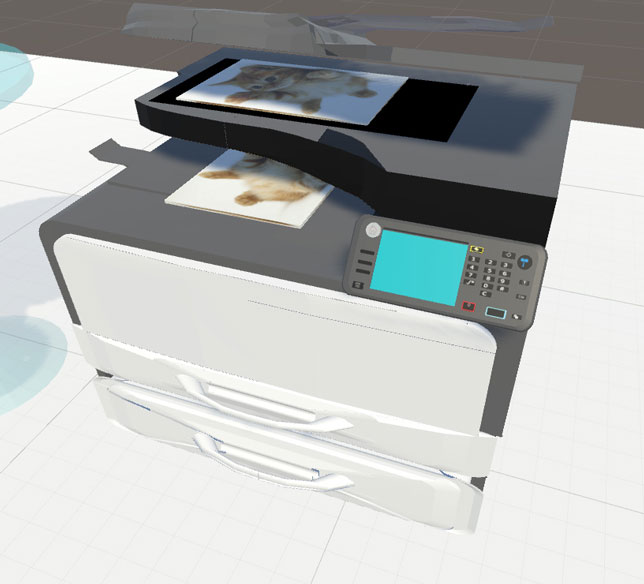
The researcher chose two virtual scenarios to test his new technology. In the coffee scenario, the user had to fetch a cup, place it exactly under a coffee machine and press the appropriate button. In the second one the user had to copy a piece of paper. During each, the individual activities and movements of the user were recorded in detail, resulting in an "activity list." A computer program called "MAUSI-VR," developed by Harms, searched the list for "typical user behavior." Finally, the behavior was evaluated by the program to point out "defined irregularities."
Source: Patrick Harms
That process "makes it possible, among other things, to determine how well users of a specific VR are guided by it and whether they usually have to perform ergonomically inconvenient procedures during its operation," said Harm in a statement.
The program also recognizes interaction problems that cause users to repeat or abort certain processes multiple times.
The concept of MAUSI-VR was based on work for automating the usability evaluation of websites and desktop applications, which was done by a Göttingen research group focused on software engineering for distributed systems, led by Jens Grabowski. That research was moved into the virtual world and supplemented by Harms.
"In contrast to manual evaluations, automated evaluations can take place more frequently, more cost-effectively and without special preparation both during the development of a VR and after its release into the market," said Harms. "This gives developers the opportunity to consider VR improvements quickly for the next software update."
About the Author
Dian Schaffhauser is a former senior contributing editor for 1105 Media's education publications THE Journal, Campus Technology and Spaces4Learning.