Apple HBCU Coding Program Adds 10 Colleges
- By Dian Schaffhauser
- 07/28/20
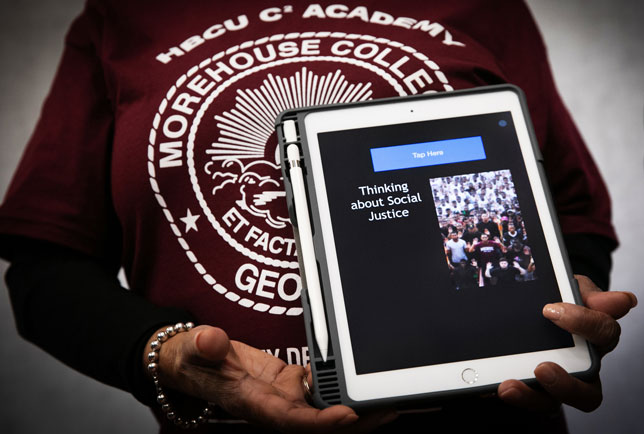
Photo: Apple/Mikki K. Harris
Apple recently said it would be adding 10 more historically Black colleges and universities to a program that aims to make HBCUs "learn-to-code hubs" for students.
The effort is part of the company's "Community Education Initiative," which was launched last year to provide "coding, creativity and workforce development opportunities" to learners of all ages. That project will now reach 24 locations around the country. Twelve of those are HBCUs and 21 serve student bodies where Black and Brown students are the majority. The programs use Apple's "Everyone Can Code" and "Everyone Can Create" courses.
Apple has been working with Tennessee State University for the last two years to grow the school's "HBCU C2" program. Part of the institution's National Center for SMART Technology Innovations, C2 serves as a national hub for training educators and supporting its peer institutions as they deliver coding and creativity (C2) to their own communities.
A recent virtual C2 summit brought together almost 300 educators from across the HBCU network to share best practices and hear from colleagues about workforce development and connecting with their communities through partnerships with local K-12 schools and other organizations.
The 10 additional HBCUs, all of which have been working alongside Apple and Tennessee State for the past year, will now become hubs to promote coding in their broader communities. Those are: Arkansas Baptist College, Central State University, Claflin University, Dillard University, Fisk University, Lawson State Community College, Morehouse College, Prairie View A&M University, Southern University at Shreveport and Tougaloo College.
For example, Southern University at Shreveport in Louisiana gradually introduced the program to students, faculty, staff and community members. "Our students are blossoming," said Special Assistant to the Chancellor for Institutional Priorities Sharron Herron-Williams, in a statement. "We invited community business leaders to our coding academy and they saw the work we were doing. One food truck owner asked the students to design him an app to help track his trucks. This fall, our team is going to start working with him to make that app a reality."
"In two years, I want all HBCUs to be coding and creating," said Robbie Melton, Tennessee State's associate vice president of the SMART Global Technology Innovation Center and dean of Graduate and Professional Studies. "In two years, you're going to see many more people of color entering the STEM workforce — and in two years we're going to double the number of Black women in technology through this program."
"Apple is committed to working alongside communities of color to advance educational equity," added Lisa Jackson, Apple's vice president of Environment, Policy and Social Initiatives. "We see this expansion of our Community Education Initiative and partnership with HBCUs as another step toward helping Black students realize their dreams and solve the problems of tomorrow."
Later this month, educators from the 10 HBCUs will be part of a group of almost 500 teachers and community leaders taking part in a virtual coding academy that Apple is hosting for all initiative partners. Educators will learn the building blocks of coding with Apple's Swift coding language. Then participants will work in teams to design prototypes to address real community challenges. After completing the coding academy, educators will begin to integrate the coding and creativity lessons into their own communities by launching coding clubs and courses at their schools, hosting community coding events and setting up workforce development opportunities for adult learners.
About the Author
Dian Schaffhauser is a former senior contributing editor for 1105 Media's education publications THE Journal, Campus Technology and Spaces4Learning.