California State U Signs 23-Campus Site License for Virtual Science Labs

Labster

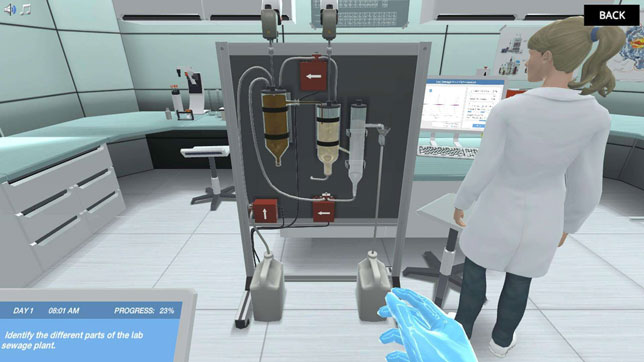
Labster's wastewater treatment virtual lab simulation allows students to work with specific steps of water treatment and prepare samples for micropollutant analysis. Source: Labster

California State University has signed a site license with Labster, giving each of its 23 campuses the option of using the company's 159 virtual laboratory simulations.

The CSU Chancellor's Office is making Labster's software available to help its STEM faculty enable students to experience scientific inquiry and discovery even as in-person offerings are limited at physical schools.

"Labster's virtual lab simulations are available for over 20 disciplines such as biology, chemistry, physics and engineering," said Leslie Kennedy, senior director of Academic Technology Services at the CSU Chancellor's Office, in a press release. "The software supplements faculty's virtual instruction, enabling students to continue to achieve their higher education goals."

The simulations run on regular computers and use 3D animations to enable students to simulate the use of lab equipment and perform experiments. The company's catalog cover topics from acids and bases to wastewater treatment.

A webinar recording is available on YouTube in which a CSU professor of biochemistry and a professor of biology demonstrate how they use the virtual labs in their courses.

About the Author

Dian Schaffhauser is a former senior contributing editor for 1105 Media's education publications THE Journal, Campus Technology and Spaces4Learning.

Featured

  • Abstract neural network 3D illustration

    Intel® AI EmpowerED: The AI-Ready Campus, Delivered

    Artificial intelligence is transforming higher education, prompting institutions to rethink how they manage infrastructure, security, governance, and workforce readiness. Successful adoption requires a strategic, institution-wide approach that aligns AI initiatives with educational goals, faculty enablement, and scalable operational frameworks.

  • Minimalist binary data fragmentation

    Fragmented Data Is Quietly Undermining Student Success and Cybersecurity Hygiene

    Siloed tools, teams, budgets, and resources spread across departments and campuses generate massive amounts of data. However, fragmentation creates unnecessary exposure to security threats and inadvertently reduces student support because no one can see the whole picture.

  • broken digital lock and glowing chain

    Cybersecurity Researchers: AI Has Crossed into the Live Attack Chain

    AI is moving beyond assisting cybercriminals and beginning to operate within live attacks, according to a new report from Check Point Research. The technology is making sophisticated capabilities faster and more accessible while creating new security risks for businesses deploying their own AI systems.

  • Abstract background with digital shield made of data particles glowing blue blocking against cyber attacks

    Report: AI Attacks Push Organizations Toward Autonomous Cybersecurity Defense

    Artificial intelligence is raising the stakes of cyber conflict as attackers use the technology to accelerate reconnaissance, uncover vulnerabilities, and launch attacks faster than many security teams can respond.