Microsoft Intros New Protections and Controls for Sovereign Cloud
Microsoft is expanding its sovereign cloud offerings with new tools designed to give oranizations tighter control over where their data resides, who can access it, and how critical systems operate, especially in light of AI becoming a bigger part of enterprise infrastructure.
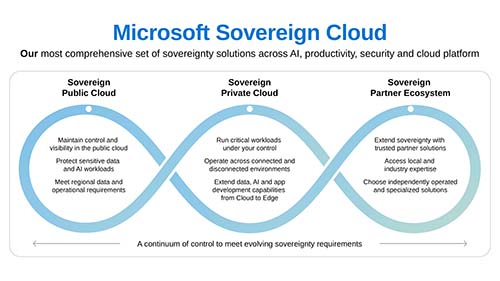
In a recent announcement, Douglas Phillips, president and chief technology officer of Microsoft Specialized Clouds, outlined updates spanning public cloud, private cloud, and partner environments. The changes target governments, regulated industries, and organizations that need tighter control over sensitive workloads without abandoning cloud-based AI capabilities.
"Digital sovereignty should give organizations greater control and security over the technology they depend on, while continuing to innovate," Phillips wrote.
One of the biggest additions is Microsoft's Sovereign Control Panel, which will enter public preview at Microsoft Ignite. Available through the Azure portal, the tool will give IT administrators one place to manage data sovereignty settings, spot compliance issues, and identify potential risks that could disrupt operations.
 [Click on image for larger view.]
Figure 1. Microsoft's outlined sovereign cloud.
Microsoft is also tightening controls over who can access sensitive systems. Its Data Guardian feature will require oversight by personnel based in Europe when Microsoft engineers access certain production systems in the European Union and European Free Trade Association. Another tool, Production Touch Ledger, will keep tamper-resistant records of that access, giving organizations a clearer picture of who accessed their systems and what they did.
Microsoft is also giving customers more control over encryption. External key management with Azure Managed HSM is now generally available, letting organizations keep their main encryption keys on hardware they own or manage outside Microsoft's cloud.
The company is also expanding its Sovereign Private Cloud offerings, giving organizations more options to run systems with or without an internet connection. New capabilities include GitHub Enterprise Local, GitHub Copilot with locally hosted AI models, and additional data services running on Azure Local.
The push for greater operational control comes as Microsoft is also reconsidering how enterprises should secure increasingly autonomous AI systems.
As reported by Redmond magazine, Microsoft is expanding Project Perception to address risks posed by what the company calls "agentic insiders," AI agents capable of accessing sensitive information and performing actions without constant human supervision.
That initiative introduces plans for Guardian Agents, specialized security agents designed to monitor other AI systems, evaluate their behavior and intervene when their actions become risky.
"Monitoring and securing those agents must become continuous," said Hayete Gallot, executive vice president of Microsoft Security.
Project Perception is about limiting what AI agents can do. Microsoft's sovereign cloud expansion tackles a different set of questions: where those systems run, who gets to administer them, and how the data stays protected.
Taken together, the two efforts point to a shift in Microsoft's enterprise AI strategy. The company is putting more weight on oversight, not just automation.
Phillips said AI is making these questions more pressing as organizations roll out intelligent systems across sensitive business processes and critical infrastructure.
For more information, visit the Microsoft blog.