University of Georgia Rolls Out New App
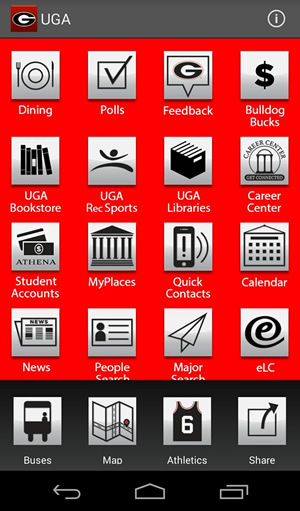
The UGA mobile app is available for both Android and Apple devices. |
The University of Georgia in Athens,
GA has introduced a new app specifically for
students, faculty and campus visitors.
The
new
app, available for both Apple and Android phones, can do everything from
help users find a parking spot on campus or an available printer, to telling
them
when the next bus can pick them up or let them know what's for lunch at
the
student union.
The
app
is now available for download from Google Play for Android devices and
the
App Store for iOS devices.
Among
the
features available on the new app:
- A campus transit bus tracker that will
let users know when the next bus will be near their location on campus. Users
can
save favorite bus stops to get schedules quickly and it will show
360-degree
photos of each bus stop for users looking for one in a part of campus
they're
not necessarily familiar with;
- A food service meal planner to help
decide which of the dining commons users want to eat at that day by
telling them
about the menus at each one, their nutritional value and real-time
capacity
percentages so users know which ones they won't have to wait in lines for;
- Athletic team news and scores,
to keep up with all
University of Georgia sports teams;
- A campus map and building search,
which
allow usersto create a custom map of the buildings and
locations they
use most;
- Parking information that
allows users to register for parking
passes, pay citations and find out about real-time parking availability
at
specific lots and garages;
- Student account information that allows students to pay all
university bills via the app;
- An e-learning commons that provides access
to class materials and assignments via the mobile device; and
- People search so users
can get contact information for all students, faculty and staff as well
as a
list of emergency phone numbers.
"The
UGA mobile app will make the literal and
figurative navigation of campus much easier," said Jim Thompson,
vice president
of the University of Georgia Student Government Association.
THE
UGA mobile app implementation is a joint
initiative by the Student Government Association and the university's Enterprise Information Technology
Services.
About the Author
Michael Hart is a Los Angeles-based freelance writer and the former executive editor of THE Journal.