Lenovo To Add Student Collaboration Tools to Updated ThinkPad 11e Education Devices
- By Dian Schaffhauser
- 02/02/15
Lenovo is upgrading its education-oriented ThinkPad 11e series. The company reported its ThinkPad Yoga 11e and more traditional laptop-style ThinkPad 11e models would now include software intended to improve student collaboration and productivity.
Both devices have 11.6-inch screens and run either Windows 8.1 or Chrome OS. By shifting the display at different angles, including 180 degrees away from the keyboard, the Yogo model converts into four modes: laptop, stand, tent and tablet.
The 11e series is enhanced with student-safe features, such as a rubber bumper around the top cover; sturdier corners, hinges and brackets; reinforced ports; and a narrower gap between keys to prevent students from plucking them off the keyboard. The Yogo model also features Corning Gorilla Glass 3 to protect its 10-point multi-touch screen.
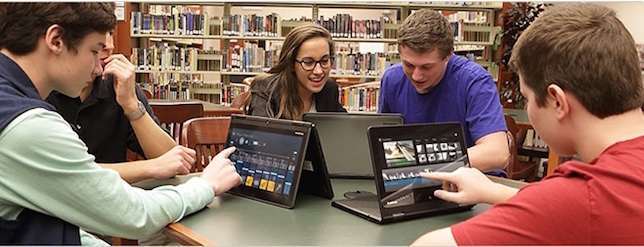
The machines will be pre-loaded with education software from Intel and, optionally, ActivePen, intended to allow the user to experience a pen-and-paper sensitivity when writing on the digital display.
In the new releases, the company will also include Lenovo WRITEit and REACHit software. The first lets the student write something and have it converted into type, including writing in text fields. The second is a file management application that helps the user find and work with files across devices and share files with other users.
The new 11e and Yogo 11e will come with Intel's 5th generation Core processors. 11e customers will also have the choice of models with AMD processors.
"We are constantly innovating our products for the education market to deliver the most long-lasting and trusted solutions possible," said ThinkPad Business Vice President Luis Hernandez. "The innovations featured in our latest ThinkPad 11e laptops — like the ActivePen technology and WRITEit software — offer a more natural device interaction in the classroom and increases the value of the solution by enhancing its productivity and end-user experience."
The new models will be available starting in April. Pricing for the ThinkPad 11e models will start at $549; pricing for the ThinkPad Yogo 11e will start at $699. The company reported that ActivePen will be available starting in April, and pricing will be set closer to that time.
About the Author
Dian Schaffhauser is a former senior contributing editor for 1105 Media's education publications THE Journal, Campus Technology and Spaces4Learning.