Prof Uses Google Glass To Deliver Feedback on Student Assignments
- By Dian Schaffhauser
- 09/22/14
A finance professor has found Google Glass to be an effective way to improve feedback to students. University of Wisconsin-Madison School of Business's Michael Gofman developed his idea in February 2014. After only a semester of using the technology to record commentary on student assignments, Gofman saw his student evaluation scores related to the quality of his feedback rise 38 percent from the year before.
The $1,500 device integrates computer functionality, such as video recording, into an eyeglass frame.
Rather than marking a project or paper up and handing it back to the student, Gofman's Teaching Assistant Adam Spencer would grade the work and then record a short video as he moved through the content, offering feedback. That video would be posted to the course management site for individual student access.
| |
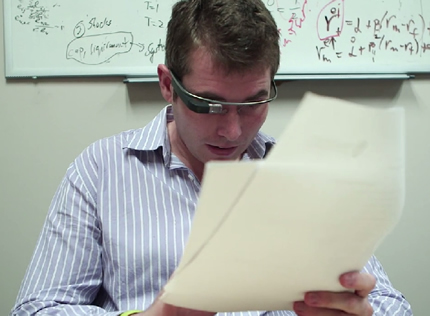
Teaching Assistant Adam Spencer uses Google Glass to record feedback for students as he goes over their work. |
|
"We're not just showing their grade and what they did wrong, but how they can improve in the future. The technology was the perfect fit for the problem," said Gofman. "Using Google Glass to deliver feedback helps students understand the material better."
As one student said, the new approach helped him identify his strengths and weaknesses to better prepare for exams. "I think the best way to learn through mistakes is by seeing someone explain it to you," said Gavin Hartzog, a finance major in the school.
The experiment also offered a new way to make assessments of student work a "formative experience and not just validation for students," added School of Business Dean François Ortalo-Magné. "The technology offered us a great opportunity to use class assessments as a learning tool."
About the Author
Dian Schaffhauser is a former senior contributing editor for 1105 Media's education publications THE Journal, Campus Technology and Spaces4Learning.