Girls Learn Virtuous Hacking at Tandon School of Engineering
- By Dian Schaffhauser
- 07/17/17
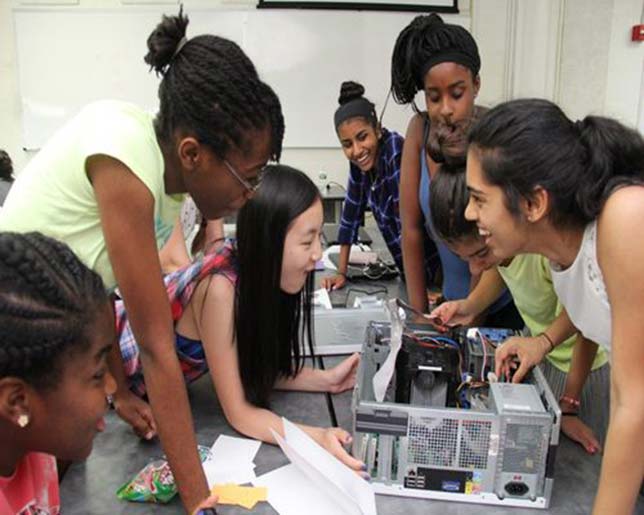
Forty-five high school girls are tackling programming, virtuous hacking and digital forensics this week at the New York University Tandon School of Engineering. The no-cost program is intended to woo more women into data security. Tandon's population of female students for the coming academic year is 40 percent, compared to a national average of 20 percent among engineering undergraduate programs in 2015, according to the American Society for Engineering Education.
The program, Computer Science for Cyber Security (CS4CS), lasts three weeks and will culminate with a cyber-mystery that involves, aptly, the theft of Wonder Woman's iconic lasso.
The students meet daily, Monday through Friday. During the first part of the camp, they receive lessons in programming, depending on their level of expertise. Then they receive an introduction to cryptography, by examining the classic cyphers, frequency analysis, hashing and related topics. From there, it's onto operating systems, steganography (the study of message concealment) and image analysis, networks, the web, databases and forensics. The program is led by members of the Department of Computer Science and Engineering and the Offensive Security, Incident Response and Internet Security (OSIRIS) Laboratory.
After the program is over, the girls are encouraged to serve as "computer science and cyber security ambassadors" to woo additional classmates to participate in Tandon's Cyber Security Awareness Week events and competitions, taking place this year in November.
The earlier students are exposed to these topics, the sooner they'll "cultivate an interest in STEM," noted Meghan Clark, lead instructor and a middle school computer science teacher at the Packer Collegiate Institute in Brooklyn. "I believe it is especially important for high school girls, as they will be more encouraged to delve deeper into the subject if they are introduced to it at a young age."
Phyllis Frankl, professor of computer science and engineering at NYU Tandon who directs the CS4CS program, agreed. "It's useful for high school girls to be exposed to computer science and cybersecurity before college so that they can realize that there are many great opportunities for them in these fields, to help build their confidence that they can succeed, and to help girls who are already interested in these areas to feel less isolated," she said.
And the outcomes appear to be trending the way the university hopes they do, Frankl added. "According to surveys we've done at the end of our camps, most attendees have increased interest in studying cybersecurity, computer science, and/or other STEM disciplines. Some of the CS4CS alumnae are studying in our undergraduate programs now and some have gone into CS majors at other universities."
CS4CS is part of the university's STEMNow camps, which invite students in for a myriad of summer education topics. They're recruited from New York City public schools with an emphasis on those who come from families in which no one has attended college and within communities typically underrepresented in STEM. Females make up six in 10 of STEMNow's participants, according to program officials.
About the Author
Dian Schaffhauser is a former senior contributing editor for 1105 Media's education publications THE Journal, Campus Technology and Spaces4Learning.