Multi-Point Videoconferencing at Indiana University
- By Linda L. Briggs
- 03/21/07
In a state full of distinguished colleges and universities, Indiana University has a long history as an early adopter of advanced media technologies. Now, the university is using a sophisticated videoconferencing system for some 2,000 administrative meetings per year, cutting down on travel time and inconveniences for faculty and staff.
Indiana U, with a residential campus in Bloomington and an urban campus in Indianapolis, has 78,000 undergraduate students and 17,000 graduate students attending the two main campuses and six additional regional campuses scattered across the state. That distribution makes videoconferencing capabilities all the more important.
Many of the administrative meetings conducted via the videoconferencing system are "multipoint," meaning participants are at various locations. It's also common for participants to arrange meetings at the last minute. That kind of ad hoc scheduling calls for equipment that allows users to initiate their own meetings, according to Kirt Guinn, manager of digital media network services for Indiana U.
However, removing his staff from the scheduling loop would have meant an expensive upgrade to the university's legacy videoconferencing equipment in order to eliminate required "dial-outs," Guinn explains. Also, the system needed to support a large, diverse population of systems and users at multiple locations; upgrading the legacy system to do that would have been "prohibitively expensive."
The university turned to
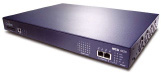
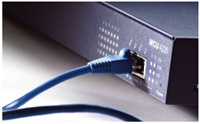
Codian, a manufacturer of high-performance videoconferencing infrastructure. The university first installed the Codian Multimedia Conference Unit (MCU) 4220 for the ad hoc administrative meetings; the system worked so well that they've now replaced all of their ports with Codian technology.
The Codian MCU brings multiple people together in video conference at one time, regardless of how many locations participants are in. In addition, the technology allows meeting participants from any location to select meeting features themselves, as well as to schedule and initiate the call.
The Codian system offers another big advantage: During a multipoint call, speakers can view other participants in a variety of ways, at their own choosing. When three or more sites are involved, the display can show a single talking head, or a so-called "Brady Bunch" view that includes an assortment of participants in a grid.
Because each participant receives an individual video connection, users can control their own conference without the need for a middleman to schedule meetings. Guinn estimates that his department's scheduling load has dropped by 40 percent with the new system, and scheduling errors have been completely eliminated.
The system is platform-independent and works with any type of endpoint technology.
"[Codian] really offered us an advanced features set," according to Steven Egyhazi, chief engineer in the digital media network services group at IU. "A lot of our users were looking for continuous presence layouts in conferences," meaning that all users can be seen at once. "They [each] wanted individual control of multipoint conferences, and Codian gives us that capability very well."
In the future, the university plans to take advantage of the Codian system's streaming server to offer playback of recorded classes, meetings, conferences, and presentations. Codian offers an IP-optimized VCR that records and archives video and data and then can either stream, export, or play back that video content to any endpoint or computer. "That allows us to capture the voice, camera, video, and XGA graphics from the instructor's laptop" and present it either live, or on demand later, according to Egyhazi. As with ad hoc meetings, users who have a videoconferencing unit can actually initiate a recording session themselves, without first scheduling it with IT.
Read More:
About the Author
Linda Briggs is a freelance writer based in San Diego, Calif. She can be reached at [email protected].