U Miami Center To Digitally Monitor How Well People Wash Their Hands
- By Dian Schaffhauser
- 08/14/09
The University of Miami Center for Patient Safety is trying out technology to monitor how well staff members wash their hands. The "hand hygiene compliance" (HHC) pilot project uses small infrared radio frequency sensors in soap dispensers that read staff ID badges and monitor the location and timing of hand-washing activities. When sufficient time has passed and the details of the hand-washing event--who, when, and where--have been transmitted, the person washing his or her hands hears a verification sound.
The system uses technology from Versus Technology, which specializes in health care-oriented "real-time locating solutions."
"Nothing matters more than the safety of our patients. That's why we are working with Versus and DCC to create an exciting, technologically-advanced system to decrease healthcare-associated infections," said David Birnbach, director of the Center.
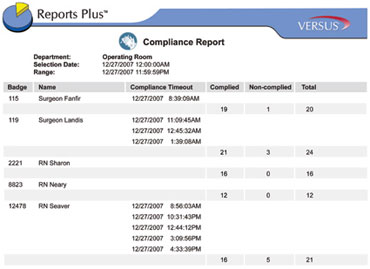
Versus Technology's software reports on staff members' washing habits. |
The stated goal of the system is to reduce healthcare-associated infections.
An application that works with the sensors tracks and reports on HHC compliance in real time. It also monitors areas to alert administrators when potential problems arise. In a statement, the company said hospital staff are alerted in real time when they forget to wash their hands. The Center for Patient Safety is planning to use the system to train students, resident physicians, and nurses.
About the Author
Dian Schaffhauser is a former senior contributing editor for 1105 Media's education publications THE Journal, Campus Technology and Spaces4Learning.