Moving to Mobile
Campuses respond quickly as the higher ed mobile marketplace takes shape.
Given the tremendous adoption of mobile devices and applications in the business and consumer markets, the rising interest in and support for mobile apps on the part of colleges and universities should come as no surprise. And while mobile technology adoption is in its infancy in higher education, we've already seen a substantial move toward the deployment of mobile applications on campus in the past two years.
According to the fall 2010 Campus Computing Survey, more than 70 percent of the surveyed CIOs and senior IT leaders "agree or strongly agree" that "mobile [LMS] apps are an important part of our campus plan to enhance instructional resources and campus services." (Currently, the majority of mobile apps in higher ed are tied to learning management systems, although their features often extend beyond the LMS.)
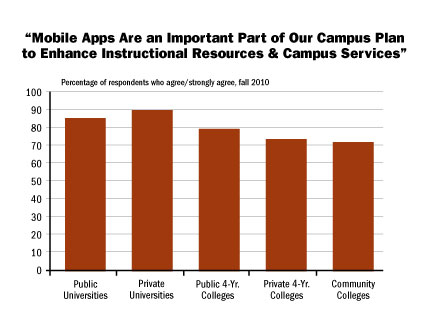
Source: Green, Kenneth C., Campus Computing 2010: The National Survey of Computing and Information Technology in American Higher Education, campuscomputing.net |
Still, the move to mobile apps on campus remains in the early stages: Just 13 percent of the more than 525 campuses that participated in the Campus Computing Survey reported that they had activated mobile LMS apps as of fall 2010. However, another 10 percent say they will go live with mobile LMS apps this academic year, while nearly a quarter have a mobile app strategy under review. From these data we can see both great interest in mobile applications, and a strong indication of a growing movement in the activation of mobile apps.
What enables this quickening pace toward mobile applications in higher education? The answer may lie, in part, in a change underway in the education marketplace. "The first mobile apps for higher ed were launched just two years ago," says Kenneth C. Green, founding director of The Campus Computing Project. "The first wave of apps came from the LMS providers. However, as of winter 2011, both administrative system/ERP and LMS providers now offer colleges and universities a wider range of applications, resources, price points, and strategies to assist campus efforts to 'go mobile.'"
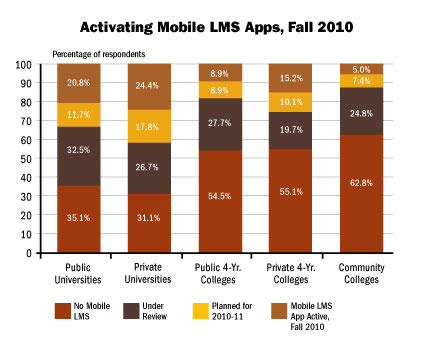
Source: Green, Kenneth C., Campus Computing 2010: The National Survey of Computing and Information Technology in American Higher Education, campuscomputing.net |
Green sees a promising future for mobile apps in higher education. "Students of all ages increasingly expect their colleges and universities to provide the kinds of app-based resources and services they utilize and enjoy as consumers," he says. "Mobile apps provide easy, anytime access to instructional resources and campus services. Indeed, mobile apps are the new campus portal, as buttons on a smartphone screen replace the bookmarks on an internet browser or the hot links on a campus portal."
| Editor's note: Casey Green will give a keynote at Campus Technology 2011, CT's annual summer conference, held this year in Boston, July 25-28. |
About the Author
Mary Grush is Editor and Conference Program Director, Campus Technology.