Arizona Western College Goes for Variety in Solar Installation
- By Dian Schaffhauser
- 12/15/11
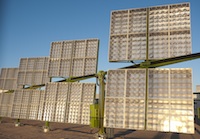
Concentrator photovoltaic (CPV) systems with dual-axis trackers are one of five different solar technologies that went live this month at Arizona Western College. |
An Arizona college has begun generating its own electrical power through a solar installation that uses five different types of technologies. Yuma-based Arizona Western College recently flipped the switch on a 5 megawatt system that takes advantage of a climate that, the National Climactic Data Center reported, gets more sunshine than any other city in the country. The college will be using the installation to generate electricity for all of its daytime needs and to use for solar-related education and workforce training goals. It already had in place a small rooftop array that generates about 106 kilowatts.
Arizona Western is has a 23-acre campus with 13,344 students. The installation includes demonstration systems of each technology for education, business, and government use. The college has been expanding its solar-related curriculum offerings to encompass solar technician certificates and renewable energy degree programs.
The five solar array technologies put in place included:
The institution reported it expects to save $3.5 million over the next 10 years in utility bills and estimated that it would be worth $62 million over the next 30 years.
The school received financial incentives from the Arizona Public Service utility, which has a renewable energy incentive program that defrayed about half of the cost of the system. The remainder was financed by Main Street Power, which also owns and operates it, and MS Solar Solutions, a subsidiary of Morgan Stanley. The college co-developed and launched the project with input from PPA Partners, an energy consulting firm. AlsoEnergy will perform energy monitoring and make the data available online for educational purposes.
The project first came together in February 2010. Over the next year the campus pulled together financing, insurance, and the technologies that would be deployed. By May 2011 Arizona Western had broken ground on the project, and, this month, it began generating power.
"As a college that has worked to develop a strong science program, with facilities and scholarships that are the envy of the state, we are thrilled to integrate solar technology into our curriculum and our sustainability plan," stated college President Glenn Mayle. "This installation creates significant savings and revenue potential for the district that is rare for colleges our size."
About the Author
Dian Schaffhauser is a former senior contributing editor for 1105 Media's education publications THE Journal, Campus Technology and Spaces4Learning.