$99 HDMI Thin Client Device Launching This Month
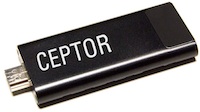
The HDMI-based and WiFi-enabled Devon IT Ceptor runs on a dual-core, 1 GHz ARM Cortex A9 processor.

Devon IT is shipping a new $99 thin client this month that plugs into a display's HDMI port and provides cloud-based desktop functionality for Citrix, RDP, and VMware environments.

The Devon IT Ceptor runs on Devon IT's DeTOS embedded, Linux-based thin client OS and is managed using the Echo thin client management platform. The compact device, which includes a dual-core, 1 GHz ARM Cortex A9 processor, resembles an oversized USB flash drive. It plugs into a monitor's HDMI port, turning it into a virtual desktop, and connects to the network using built-in WiFi (802.11a/b/g/n 5 GHz and 2.4 GHz). It also includes:

  • Bluetooth connectivity (2.1+EDR) for keyboard and mouse;
  • A USB-B micro port;
  • 512 MB or 1 GB system memory;
  • 1080p output.

Supported client connections currently include VMware Horizon View, PCoIP, Citrix ICA/Citrix HDX, and RDP 7, according to pre-release specs published by Devon IT.

The Devon IT Ceptor is expected to ship Aug. 31. Preorders are available now. Additional details can be found on Devon IT's site.

About the Author

David Nagel is the former editorial director of 1105 Media's Education Group and editor-in-chief of THE Journal, STEAM Universe, and Spaces4Learning. A 30-year publishing veteran, Nagel has led or contributed to dozens of technology, art, marketing, media, and business publications.

He can be reached at [email protected]. You can also connect with him on LinkedIn at https://www.linkedin.com/in/davidrnagel/ .


Featured

  • robot hand holding stacks of coins

    Designing AI Systems for Financial Aid

    Financial aid offices have been slow to adopt AI, risking technological stagnation at a critical early student touchpoint. Systematic AI integration can improve student experiences and strengthen institutional positioning.

  • Digital cyberspace with particles and Digital data

    Report: AI Is Moving Faster than Data Trust

    AI agents are already in use or pilot at most organizations, but data visibility, governance and precision recovery capabilities have not kept pace, according to Veeam's new Data & AI Trust Gap report.

  • closeup of person wearing abstract smart glasses

    Google Unveils Android XR Smart Glasses, Powered by Gemini AI

    More than a decade after the commercial failure of Google Glass, Google is returning to the smart-glasses market, this time betting that advances in artificial intelligence, miniaturized hardware, and conversational computing can turn wearable devices into a mainstream platform.

  • Dana Brunson facilitates a roundtable discussion with research and higher education IT leaders

    Internet2: Closing the Access Gap for Research Cyberinfrastructure

    Internet2's Research Engagement Team brings CIOs and other campus technology leadership together with research computing and data facilitators, forming a community that enables research cyberinfrastructure at institutions of all types and sizes.