UC Irvine Coverts to Electric Bus Fleet
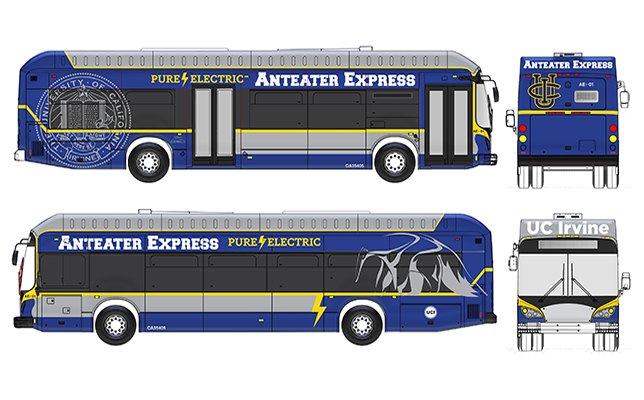
Image Credit: UCI News.
The University of California, Irvine (UCI) will roll out a fleet of 20 new electric buses for the 2017-18 school year, making it the first college campus in the nation to completely scrap its traditional diesel fuel-powered buses in favor of alternative energy transportation, according to university officials.
A student referendum in 2013 called for the expansion and update of UCI's campus-based transportation system. A requirement that the buses use clean energy helped the measure pass, according to Tracy La, president of the Associated Students of UCI. A subsequent survey revealed that students' top transportation priority was to switch to an electric fleet.
UCI's Anteater Express shuttle service is student-funded and operated. It will acquire the new buses from the electric vehicle manufacturing company Build Your Dreams for $15 million, and the buses will be built at the company's plant in Lancaster, CA. Undergraduate students voted to pay up to $40 per quarter to cover the costs.
In 2015, the campus transportation service welcomed a hydrogen electric bus as part of a demonstration project funded by the California Energy Commission (CEC) through CalStart, according to information on the Anteater Express site. UCI is home to the National Fuel Cell Research Center and the first hydrogen fuel station in California, which was expanded in 2015 to accommodate the fuel cell electric bus fueling.
“The hydrogen electric bus emits no carbon – neither does the battery electric bus,” said Scott Samuelsen, professor of engineering and head of the National Fuel Cell Research Center, in a prepared statement. According to Samuelsen, while hydrogen and electricity production both generate carbon dioxide contributing to climate change, technology advances over the next few years will make those energy sources carbon-free.
The University of California system has pledged to become carbon neutral by 2025. By replacing diesel buses with electric, UCI expects to reduce tons of carbon dioxide emissions annually.
About the Author
Leila Meyer is a technology writer based in British Columbia. She can be reached at [email protected].