UT San Antonio and Partners to Open Tech High School
The University of Texas at San Antonio will bring its teaching expertise and other academic support to a STEM and business high school opening this fall.
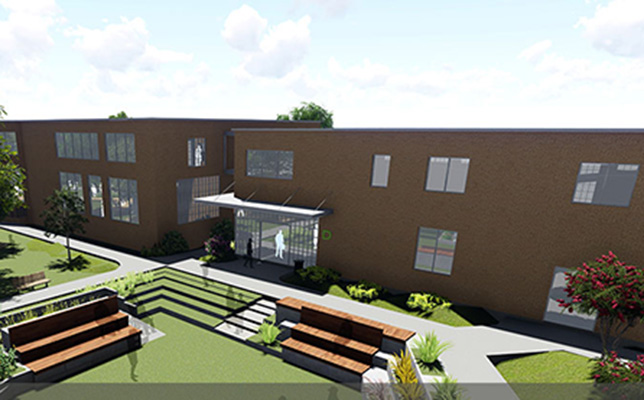
Image Credit: CAST Tech.
The University of Texas at San Antonio (UTSA) is working with the San Antonio Independent School District (SAISD) and several Texas companies to launch a series of industry-led, career-themed schools. The network, collectively known as CAST (Centers for Applied Science and Technology), will teach students coding, cybersecurity, entrepreneurship and business skills.
The first school in the network, CAST Tech High School, opening fall 2017, will teach these skills using a project-based learning approach. “Some features of the unique program include flexible schedules, hands-on projects and real-world problems to solve, as well as job shadowing, mentorships, internships and job opportunities upon graduation,” according to the school site.
UTSA faculty members and students within the UTSA College of Education and Human Development, UTeachSA and GE²MS programs will provide teacher preparation and counseling services; launch literacy initiatives; conduct collaborative research; and offer other academic supports and resources to the high school. The UTSA-SAISD partnership will also “increase the number of career and technology certified instructors and dual-credit and master's degree professionals on SAISD staff and in San Antonio,” the UTSA announcement said.
CAST Tech is an early college high school in some respects, allowing high school students to earn college credits. However, the role of industry will be the main focus. For example, CAST Tech is partnered with H-E-B, a privately held supermarket chain based in San Antonio, which led a committee that started CAST. CAST Tech will also work with Tech Bloc, a San Antonio-based technology economy advocacy movement working to build a pipeline of talent in San Antonio that can attract and retain the next generation of highly skilled workers.
Other industry partners include:
“If we’re going to build a hi-tech high school, we need the hi-tech community to be involved in designing the high school — designing the curriculum, what happens in the classroom, giving real-world problems for the kids to solve and group projects together [to foster] interdisciplinary learning,” said Kate Rogers, H-E-B vice president of corporate communications and health promotion, in a video statement.
CAST plans to establish similar schools across San Antonio with other industry partners and local school districts.
To hear from these industry partners as well as CAST Tech faculty and students, watch the video on the H-E-B site. Further information is available on the CAST site.
About the Author
Sri Ravipati is Web producer for THE Journal and Campus Technology. She can be reached at [email protected].