Social VR Platform AltspaceVR Says Goodbye
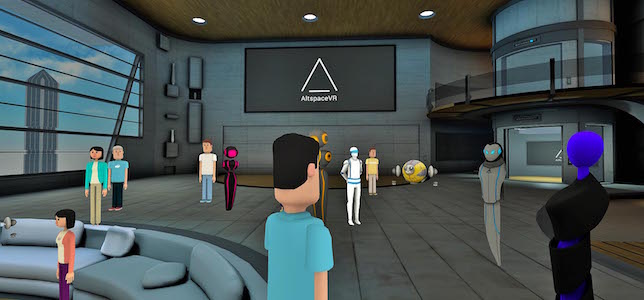
Image: AltspaceVR.
The virtual reality (VR) social platform AltspaceVR last week announced it would host its final event on Aug. 3 and then shut down.
AltspaceVR enabled users to virtually gather in simulated environments not unlike the real world. As avatars, users could chat with friends or host live events like conferences, concerts and weddings. Notable past events include a live performance by comedian and musician Reggie Watts. More recently, Bill Nye teamed up with NBC News for an event.
“We hosted so many firsts!” AltspaceVR wrote in its farewell post. “And we still have the record for most people in VR at one time …. We’ve also seen so many community members come into their own and host karaoke nights, improv, movie nights and meetups for people all across the globe.”
“It is with a tremendously heavy heart that we let you all know that we are closing down AltspaceVR on August 3rd, 7PM PDT,” the company wrote, citing “unforeseen financial difficulty and we can’t afford to keep the virtual lights on anymore. This is surprising, disappointing and frustrating for every one of us who have put our passion and our hopes into AltspaceVR. We know it will probably feel similarly for you,” the post said.
However, AltspaceVR wants the public to know it’s not shutting down because social VR as a concept is failing. “Around 35,000 people use our product every month, which we think is pretty good for the size of the VR market,” the company wrote. “The average user spends 35 minutes a day in AltspaceVR, and in big events we typically see around a thousand attendees. We have active developer and event organizer communities and have attracted marquee partners for our events.”
The software-based platform worked with Daydream, Oculus Rift, HTC Vive and Samsung Gear VR. AltspaceVR is similar to Linden Labs’s Second Life and Sansar, which just opened to the public this week. Other major players remaining in the social VR space include VRChat, as well as Facebook’s Facebook Spaces (in beta) and Roblox.
About the Author
Sri Ravipati is Web producer for THE Journal and Campus Technology. She can be reached at [email protected].