Underwater 360 Degree Camera from Boxfish Shoots 5K Video
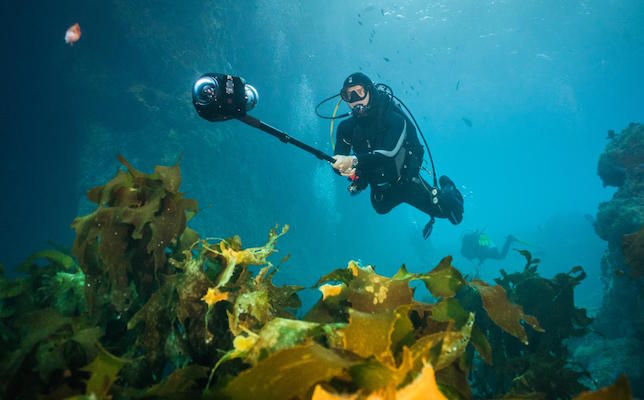
Image: Boxfish.
Boxfish Research has released an underwater virtual reality (VR) camera, Boxfish 360, designed to create high-quality and engaging learning experiences for students and other audiences.
A recent study from Stanford University found that putting people in a simulation of ocean acidification (the ongoing decrease in pH of the Earth’s oceans and subsequent negative impact on marine organisms, caused by the uptake of carbon dioxide from the atmosphere) invoked a greater sense of empathy than a similar video-only experience. The reason is that embodied cognition, or the effect of the body’s actions on the mind, is linked to the process of perspective-taking. In other words, the combination of interaction and realistic environment that VR offers can contribute to increased engagement and empathy.
“Researchers and educators can't take all of the world into our oceans, but with a 360/VR underwater camera they can easily bring the oceans to the world, creating unique teachable moments that would be impossible in other learning settings,” the New Zealand-based company said in prepared statement.
The Boxfish 360 can continuously record 5K-UDH video or time-lapse photos for up to three hours, helping take away some of the time-pressure associated with filming underwater. It records depth, temperature and compass heading as well, which can be integrated into video captions, HUD-style overlays and more, according to information from the company.
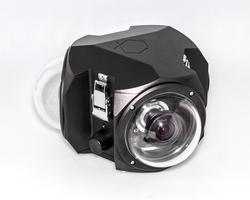
Image: Boxfish Research.
Furthermore, the camera is designed to make it easy to create high-quality 5K underwater video with little resources. The corresponding app for Windows and Mac, for instance, can be used for post-production to edit project files; videos can easily be shared afterward.
National Geographic recently used the Boxfish 360 to produce a story on talking fish.
Boxfish Research provides small unmanned underwater vehicles for inspection, filming, science, education and adventure. To learn more, visit the company site.
About the Author
Sri Ravipati is Web producer for THE Journal and Campus Technology. She can be reached at [email protected].