Arizona State Adopts AI-Powered Calculus Learning Platform
- By Dian Schaffhauser
- 05/02/19
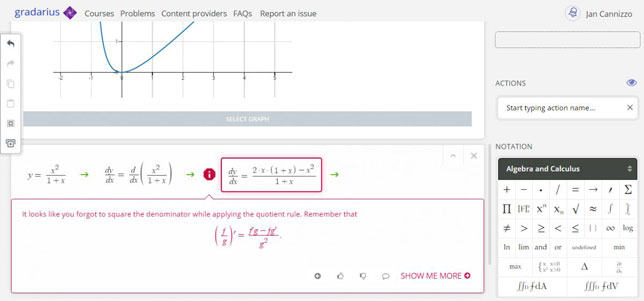
Image: Stevens Institute of Technology/Jan Cannizzo
Arizona State University is expanding its use of an online calculus application with built-in artificial intelligence. Currently, two courses — Calculus for Business and Calculus for Engineering — are using Gradarius from Castle Point Learning Systems, which personalizes the learning based on topics already understood and those still to be learned. The university expects to deploy the learning platform in additional courses in the coming semesters.
The software offers interactive functionality, including step-by-step feedback and guided problem-solving, to help users master calculus concepts. As they step through problems, the program points out mistakes and offers hints. When students make mistakes, the program pinpoints what part of the solution was wrong and offers guidance on how to correct it.
"As part of our mission at ASU, we look to provide our students with the educational tools they need in order to be successful in their academic journey. We look forward to working with Castle Point Learning Systems in incorporating the Gradarius platform into our courses," said Sean Hobson, chief design officer for EdPlus at ASU, in a statement.
Gradarius — Latin for "going step-by-step" — was created at Stevens Institute of Technology by math professors who were concerned that students with an interest in STEM were struggling with calculus, and therefore changing majors or dropping out of their calculus courses to avoid failure. According to the company, the Institute has used the program for the past five years. In 2017 Stevens calculus classes dropped their textbooks; now students use lecture notes provided by faculty online and chat with their instructors through the software, which issues the problems for them to solve.
About the Author
Dian Schaffhauser is a former senior contributing editor for 1105 Media's education publications THE Journal, Campus Technology and Spaces4Learning.