Video Wall Showcases Student Success at Fayetteville State University
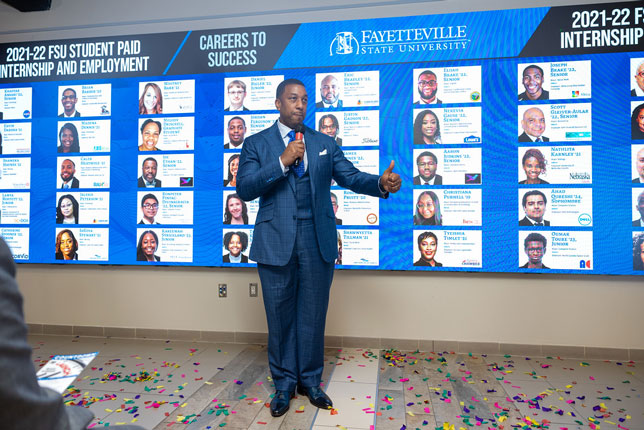
Fayetteville State University's Wall of Success
North Carolina's Fayetteville State University recently unveiled a video wall in its Rudolph Jones Student Center that highlights successful student internships and post-graduate employment. The Wall of Success is part of the historically Black institution's commitment to increase internship access and opportunities for its students, according to a news announcement.
"The Wall of Success is representative of student success and possibility. We want to see every student showcased here," said Chancellor Darrell Allison in a speech during the unveiling event. "The resources are in place. Employers are increasingly eager to work with our exceptional students. Moreover, our impact is stretching beyond campus, economically benefitting our community and the entire state. I'm looking forward to greater opportunities for our students."
Comprised of 176 LED video modules, the Wall of Success measures 36 by 6.75 feet and will be used to showcase student leadership and achievements, either in their paid internships or in post-graduation careers. It will also recognize corporations and agencies that have employed FSU students. The goal: to "reinforce for students and faculty the importance and the accessibility of internships — and the many paid internships being made available," the university said.
Last year, Chancellor Allison set a target to launch 100 paid student internships or new careers by the end of this academic year, and 750 by the year 2024. Since spring 2021, 105 FSU students have participated in paid internships, and the university has partnered with more than 70 companies or agencies for its internship program.
Ultimately, the Wall of Success "contributes to the university's key priority of embracing students where they are and preparing them for the future," the university said. "It showcases student success stories as encouragement for other students to strive for similar opportunities."
About the Author
Rhea Kelly is editor in chief for Campus Technology, THE Journal, and Spaces4Learning. She can be reached at [email protected].