There Is No Going Back: College Students Want a Live, Remote Option for In-Person Classes
The COVID-19 pandemic brought a massive, unplanned change to how college lectures were delivered, and many schools rapidly shifted to 100% online for some period, through applications such as Zoom. Post-pandemic, schools can carefully select the best approach for lecture delivery, which is not necessarily the prior, pre-pandemic approach. Schools should factor in the perspectives of their students in this decision.
Based on a survey of college students over the last three semesters, students understand that remotely attending a lecture via remote synchronous technology is less effective for them than attending in person, but they highly value the flexibility of this option of attending when they need it. (View more details on the survey questions and results here.)
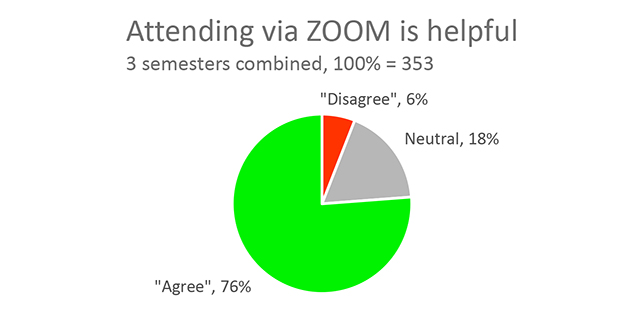
Across three semesters, 76% of students agree that attending classes via Zoom is helpful.
Here are the key survey findings:
- Not everyone uses remote synchronous technology. While a large segment of students (40% in the most recent semester) attended class remotely at least once in the semester, the majority did not use the technology in the most recent semester.
- But most want the option. Three-quarters of students surveyed find remotely attending helpful, and many comment that they highly appreciate the option, even if they do not use it.
- Reasons that students attend class via a live, remote option span a wide range: from being ill to scheduling conflicts to travel to convenience to just needing a break.
- Most students want to decide for themselves when to go remote. While students understand the remote experience pales in comparison to being in class, yet almost two-thirds want to make that decision for themselves given their situation.
- A smaller segment of students does not want any live, remote option available. The exception in the survey was when a student is too ill to attend. This segment, about one-third of students, cites that the benefits of an in-class lecture require students to show up in class in person.
- Recommended way forward: Many suggested having the live-remote option, but limiting the total number of times a student can exercise the option to prevent potential abuse.
- Student preferences for live, remote technology go beyond the classroom. Students comment that their experience with this technology informs their preferences for future employer policies that favor hybrid or remote work environments.
College leaders should factor in the "voice of the student" in making policies related to live, remote access of class lectures. Based on this multi-semester survey, students want the option to attend remotely; but knowing that the in-person experience is better, most will not exercise the option unless they truly need it.
About the Author
Eric Paljug is a clinical associate professor of business administration and associate director of the Center for Supply Chain Management at the University of Pittsburgh's Joseph M. Katz Graduate School of Business.