Global Initiative to Open 50 Virtual and Augmented Reality Labs
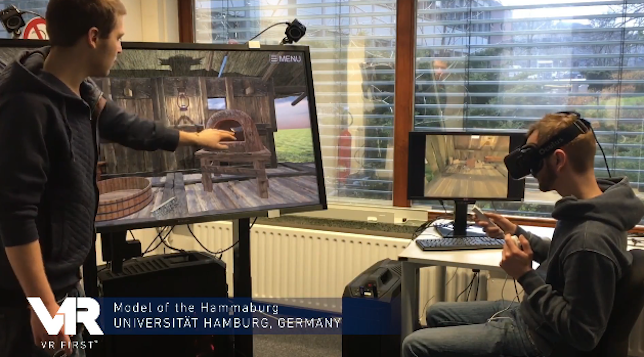
Image Credit: VR First.
VR First, a global initiative to democratize virtual and augmented reality (VR/AR) hardware and software for academic institutions, is planning to open 50 VR/AR labs at colleges and universities by the end of this year, in an effort to meet future workforce demands.
VR First believes these immersive technologies will drive the future job market and therefore students should be trained using such technologies and tools. To date, there are 26 “VR First Labs” operating around the United States, Europe, Asia and Oceania, and 14 more will “open soon,” according to a news release. VR First has worked with universities and science parks worldwide, from Purdue University to Aalborg University Copenhagen in Denmark, helping institutions to set up or renovate current PC labs into VR/AR-reading facilities.
Applications for content created in the labs range from “gaming, education and architecture to cinematics, psychology and other sectors,” the news release said. Of the 50-plus projects currently in development at VR First Labs, games account for the majority of projects under way (35 percent), followed by psychology and neuroscience (12 percent); education (7 percent); tourism (7 percent); and architecture and real estate (6 percent). For example, Oklahoma State University’s Mixed Reality Lab, a VR First partner, is creating an AR-based mobile app that functions as a mapping device for individuals with physical disabilities or mild memory loss. (Watch the video footage of a few projects below.)
In addition to providing workforce training, the initiative will establish new standards for creation and consumption environments in VR, AR and mixed reality. For instance, VR First is working with the Institute of Electrical and Electronics Engineers (IEEE) and industry stakeholders to develop IEEE P2058.5, which is one of eight standards being developed for the Digital Senses Initiative.
Video game and software developer Crytek initially backed the initiative, but the project is now fully independent. VR First has 581 academic networks and more than 3,700 developers worldwide, according to its site.
Further information is available on the VR First site.
About the Author
Sri Ravipati is Web producer for THE Journal and Campus Technology. She can be reached at [email protected].