UCSD Plants Solar Trees on Parking Structures
University of California, San Diego is taking a novel approach to generating sustainable energy on its campus by transforming its parking garages into solar power plants. With the help of Envision Solar, the university is "planting" Solar Trees on the roofs of two of its parking structures to generate electricity for the campus and provide infrastructure for supporting electric vehicles.
As seen in the photo below, the Envision Solar Trees (collectively known as a "Solar Grove") take their cue from nature and use a tree-like design to support solar panels on trunks and branches, creating a canopy that will shade vehicles parked on the roof.
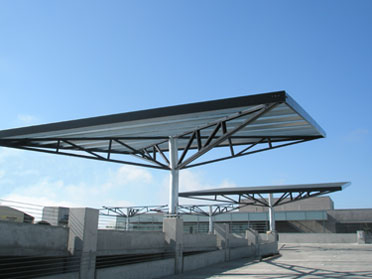
"This photovoltaic installation marks an historic event for a campus that has become a living laboratory for climate change solutions," said Steve Relyea, vice chancellor of business affairs for UCSD. "Our sustainable energy program is the result of a campus-wide commitment by students, faculty and administration to advance environmental sustainability on a local, national and global level."
According to Envision, each of the Solar Trees, which use Kyocera photovoltaic modules, will generate "17,000 hours of clean energy per year, which is enough to power more than four single-family homes." The company also said that each tree saves about 13.2 metric tons of carbon emissions.
UCSD began installing solar panels back in July on the rooftop of its East Campus Utility Plant with the help of Borrego Solar. (Read related story here.) These efforts are part of a larger sustainable energy program that also encompasses biogas fuel cells and wind energy that, combined, are expected to produce 29 million kilowatt hours per year in green energy.
UCSD's Lisa Schaeffer, executive director of the university's Environment and Sustainability Initiative, will be presenting at the upcoming 2008 American Association for Sustainability in Higher Education conference in November in North Carolina, along with Envision CEO Robert Noble.
UCSD, one of 10 campuses in the University of California system, serves about 27,500 students and has an annual budget of $2.4 billion.