TI Targets Engineering Students with Robotic System Learning Kit
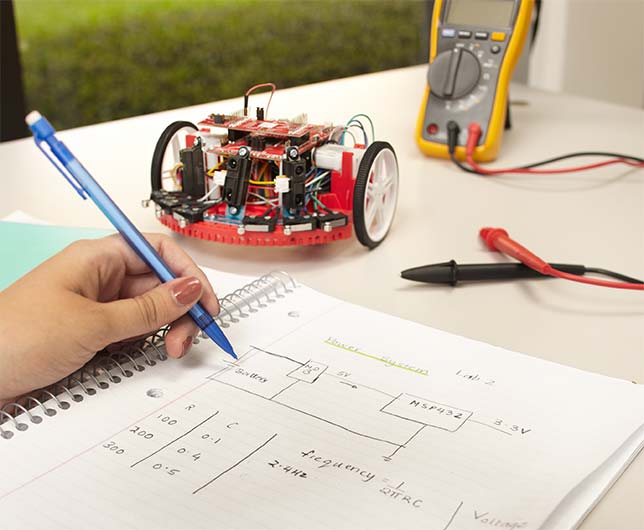
TI Robotics kit 

Texas Instruments this week took the wraps off a new robotics system and curriculum aimed at university-level engineering students.

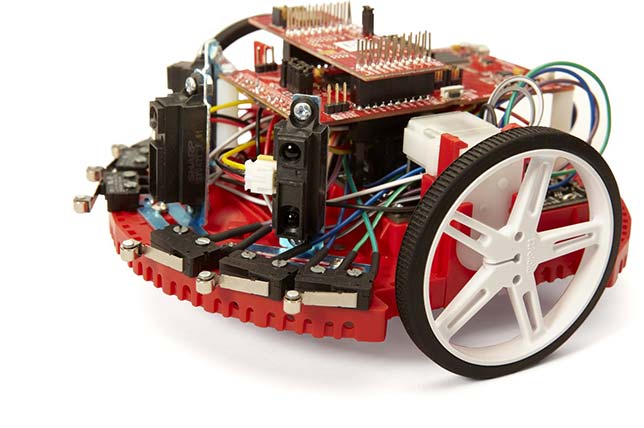
The TI Robotic System Learning Kit is available in two versions, Basic and Advanced. The Basic Edition ($99) includes the core SimpleLink MSP432P401R MCU LaunchPad development kit, which is designed for high-performance applications requiring low power consumption. It uses a 32-Bit ARM Cortex-M4F MCU with 16-bit ADC, 256 KB flash memory and 64 KB RAM. It also offers a 40-pin BoosterPack connector (with support for 20-pin BoosterPacks), an XDS-110ET emulator and two buttons and LEDs, among other features.

Also included in the Basic Edition are:

  • A motor drive;
  • Power distribution board;
  • Robot chassis;
  • Various motors;
  • Line IR sensors; and
  • "50+ other mechanical and electronic components," according to TI.
Texas Instruments this week took the wraps off a new robotics system and curriculum aimed at university-level engineering students. 

The Advanced Edition ($199) includes all of those components, plus:

  • SimpleLink Bluetooth low-energy CC2650 module BoosterPack plug-in module;
  • SimpleLink WiFi CC3120 wireless network processor BoosterPack plug-in module;
  • Distance IR sensors; and
  • Tachometer.

The first curriculum released for the kit is the Maze Edition Curriculum, which includes 20 modules covering a wide range of electrical engineering and robotics concepts and activities. The full curriculum can be viewed on TI's site.
Texas Instruments this week took the wraps off a new robotics system and curriculum aimed at university-level engineering students. 

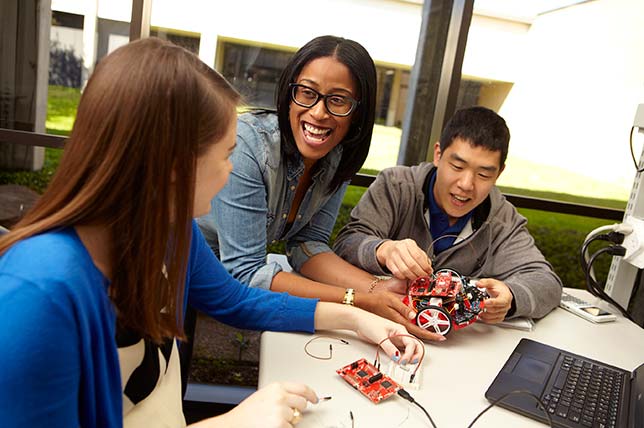
"Whether taught as an introduction in the freshman year or as an advanced design lab later on, the TI-RSLK is an effective means for students to get a hands-on learning experience of engineering concepts that span electrical, mechanical and computer science systems," said  Jon Valvano, electrical and computer engineering professor at  University of Texas at Austin, who developed the TI-RSLK with TI.  "This not only encourages many students to pursue an electrical engineering degree in the first place, but to also persist in their field of study as it gets more challenging."

Complete details can be found on TI's site.

About the Author

David Nagel is the former editorial director of 1105 Media's Education Group and editor-in-chief of THE Journal, STEAM Universe, and Spaces4Learning. A 30-year publishing veteran, Nagel has led or contributed to dozens of technology, art, marketing, media, and business publications.

He can be reached at [email protected]. You can also connect with him on LinkedIn at https://www.linkedin.com/in/davidrnagel/ .


Featured

  • circuit patterns

    Anthropic Launches Lower-Cost Claude Sonnet 5

    Anthropic has released Claude Sonnet 5, positioning the model as its most autonomous mid-tier offering to date and a lower-cost alternative to its flagship Opus 4.8 system. The company said the model can plan multi-step tasks, operate tools such as browsers and terminals, and complete agentic work at a level that previously required larger and more expensive models.

  • Businessman using laptop analyzing data and growth graph chart

    AI Budgets in Education Show No Sign of Decline

    The vast majority of education organizations (98%) expect their AI infrastructure budgets to either increase or hold steady over the next year, according to a recent report from cloud storage provider Wasabi.

  • closeup of person wearing abstract smart glasses

    Google Unveils Android XR Smart Glasses, Powered by Gemini AI

    More than a decade after the commercial failure of Google Glass, Google is returning to the smart-glasses market, this time betting that advances in artificial intelligence, miniaturized hardware, and conversational computing can turn wearable devices into a mainstream platform.

  • artificial intelligence on laptop

    OpenAI to Combine AI Products into Desktop 'Superapp'

    OpenAI is reportedly developing a desktop application that would combine several of its emerging AI products into a single platform, according to reports, marking the latest step in the company's effort to transform ChatGPT from a standalone chatbot into a broader productivity and automation environment.