Kno Makes Digital Texts Accessible Through Facebook
- By Dian Schaffhauser
- 08/10/11
Digital textbook reader startup Kno plans to release its collection to Facebook, allowing its campus customers to buy and read e-books through a social networking service where, according to researchers, they already spend a lot of time. Simultaneously, the company is running a Facebook contest in which students can earn discounts on e-books. Kno has also announced an updated version of its Apple iPad e-reader application and released a Web-based version of the reader.
With the new Facebook option, students can study alone or with friends online and can post questions from their e-text to their Facebook news feed. A recent survey from Kelton Research, funded by Kno, found that college students spend an average of three hours a day on the site and that two-thirds of them would be likely to use an app through Facebook that might improve their grades. The researchers also found that if students could access their textbooks from anywhere, six out of 10 would study "more often."
The upgrade to version 1.5 of Kno's iPad reader introduces Journal and QuizMe. Journal allows users to transfer images, highlights, sticky notes, text, and other media from an e-textbook into a single digital notebook for review. QuizMe hides captions from diagrams captured from e-textbooks and lets the users test themselves with on-the-fly multiple-choice quizzes that include grading.
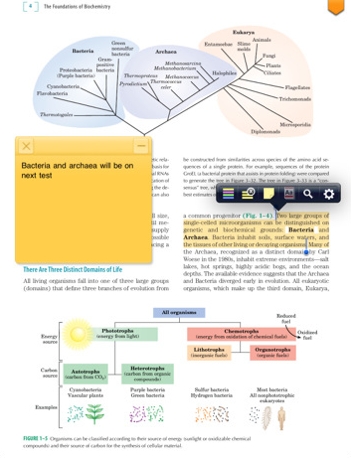
Kno Journal allows users to maintain digital notebooks for later review. |
Kno's new reader for the Web provides access to its inventory of about 100,000 textbooks, case studies, and study guides through a standard browser.
Calling the traditional textbook "an oversized paper weight," Kno's CTO and co-founder Babur Habib said, "Our features do things that nobody else in the industry can do and our selection of more than 100,000 interactive e-textbooks, whose pages match exactly with those of their print counterparts, is unparalleled. We believe that by making these textbooks more interactive, accessible, and affordable, students will want to ditch their heavy backpacks and opt for the digital version of their books."
The contest that grants students discounts on their textbooks will be in operation until September 30, 2011. Students visit the Facebook page, facebook.com/GoodtoKno, to spin a virtual "wheel of knowledge" and earn points towards e-book rental or purchase credits. An individual can win up to $50 in Kno store credits by earning 250 points, the company said. Two participants will also win an iPad 2 in a random drawing. The rules for the contest are posted online.
About the Author
Dian Schaffhauser is a former senior contributing editor for 1105 Media's education publications THE Journal, Campus Technology and Spaces4Learning.