U Michigan Brings K-12 Educational Software to Cell Phones
Engineers at the University of Michigan have developed software aimed at turning cell phones into educational tools for K-12 students. Why? According to developer Elliot Soloway, cell phones cost a fraction of what a laptop costs but can do just about anything a laptop can do. As an added bonus, students are already bringing the devices to school with them.
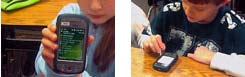
Images courtesy of the Universty of Michigan. |
A pilot program using the software suite is currently underway at Trinity Meadows Intermediate School, part of Keller Intermediate School District in Texas. There, 53 fifth-grade students were equipped in January with smart phones. According to information released by U Michigan, students could not text or make phone calls but were allowed to use other phone features, including audio, image capture, and the educational software itself.
Trinity Meadows teacher Matt Cook, who started the pilot program, arranged for equipment and training donations from Verizon (service), HTC Corp. (phones), Celio Corp. (screens), and Microsoft (training).
"The phones will be seamlessly integrated into my lessons," Cook said in a statement released this week. "I think that right off the bat, this will add a level of student engagement. They'll be more interested in the lessons because we're talking in the students' language. Any time you can do that, you're a lot more likely to be heard."
According to information posted on the district's Web site, "Educational environments have responsibilities and obligations to provide students with tools that simulate real world learning environments. Mobile learning devices provide options that will lead to such conditions."
The goals of the project are to determine whether, using the technologies, students can demonstrate a greater depth of knowledge; to help students understand social networking and the responsible use of technology; and to extend the learning day for students. According to the district, educators and an intervention specialist will work collaboratively to "design best instructional practices and materials to increase students' technology skills."
"This is the beginning of the future," Soloway said in a statement released this week by the University of Michigan. "The future is mobile devices that are connected. They're going to be the new paper and pencil."
A video of the technology can be seen here. Further information about the pilot program in Texas can be found here.