Social Networking - Hofstra University
- By Mary Grush, Matt Villano
- 07/28/09
Given the current economic climate, there is a real need for creating relationships that facilitate the exchange of professional opportunities with and amongst university communities. With that in mind, Hofstra University (NY) set out to provide tools and services to foster strong adviser relationships among its students and alumni.
“Hofstra has a community of well established, successful alumni who are eager to give back in the form of professional advisership,” says project lead Fred Burke, executive director of the school’s Career Center. “The difficult thing was finding a system like Facebook that was fun, familiar, simple, and made people want to use it.”
For two years, the Career Center worked with professional network technology provider MyWorkster to develop MyWorkster@Hofstra, an online social networking service that enables alumni advisers to mentor current and past students alike. The site debuted in March 2009, and has succeeded in bringing together Hofstra constituents in an environment that fosters online mentoring, builds community, and extends the university’s brand in the marketplace as a whole.
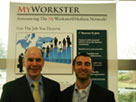
Jeffrey Saliture, CEO of MyWorkster, likens the system to “Facebook for professionals; like eHarmony but for jobs,” and says the interface combines the most popular social networking technologies of the day. “People can use this the same way they’re using other Web 2.0 sites, allowing them to connect to people who will help them get a job,” he says. “What gives the interface appeal is that it’s familiar, yet targeted for a purpose.”
MyWorkster@Hosftra users can connect with advisers in a variety of media: text chat, video, audio, and more.
Here’s how the system works: First, an alum registers to become an adviser, providing his or her name, alumni ID number, preferred method of contact, and other information. The data are then sent to the university for approval before the registrant becomes a part of the MyWorkster@Hofstra community. Once alumni have been certified, they can answer questions about anything from the current job market, to how to find a job in a particular industry or niche.
Alumni advisers are available 24 hours a day, seven days a week. Students can search for advisers based on location, industry, and company, to find the mentor who they think will work best for them. Users can connect with advisers in a variety of media: text chat, video, audio, and more. The site utilizes technology from Meebo (for instant messaging) and Skype (for internet voice and video calling), and interfaces easily with general-interest sites such as Facebook and LinkedIn.
Though the service is relatively new, positive feedback indicates the technology is benefiting a variety of constituents. Users appreciate the guidance from advisers; alumni are able to give back to the Hofstra community. When advisers help users find new jobs, the university benefits from an increased presence in the marketplace.
As an added plus, university officials can download all of the data from the system (e-mail addresses, contact info, employer info, etc.) and use it to populate internal databases. At Hofstra, the Career Services department downloads the data into SunGard Banner Unified Digital Campus, allowing various departments to leverage the information for a variety of purposes. “The university relies on this system to maintain better contact and employment data on its alumni,” Burke points out. Such up-to-date information is invaluable for donor relations, for instance, which ultimately fills coffers in the school’s endowment and benefits technology investments across the board.
About the Authors
Mary Grush is Editor and Conference Program Director, Campus Technology.
Matt Villano is senior contributing editor of this publication.