MIT Mini Maker Faire Draws 3,000 Attendees
The Massachusetts Institute of Technology in Cambridge, MA hosted everything from
a robot tournament to 3D printing demonstrations and panel discussions
on
do-it-yourself DNA during the October 4 inaugural MIT
Mini Maker Faire.
Held
on
the university's North Court, about 3,000 children and adults attended
the
event, part of the Maker Faire series started by the editors of Make
Magazine.
More than half the 110 exhibitors were students or faculty members at
MIT.
"At
MIT,
we celebrate the artist, the scholar and the smith," said MIT Professor
Marty Culpepper.
Among
the
events that took place was a robot tournament in which audience members
were able to cheer on their favorites, all of which were built and
entered into
the competition by local robot makers.
At
the
MIT Hobby Shop, attendees were able to see things like a full-size
sculpture of the Iron Man suit and handmade objects such as musical
instruments,
pillows, jewelry and photography.
Live
demonstrations
allowed attendees to learn more about hand-tooling leather and
the creation of a boat using a lashed bamboo frame and origami. A 3D
computer-aided
design tool, BlocksCAD, helped children as young as 9 design and print
their
own creations.
Panel
discussions
covered topics as diverse as an open-source program for 3D
printers, barriers to female makers and high-tech cosplay.
There
was
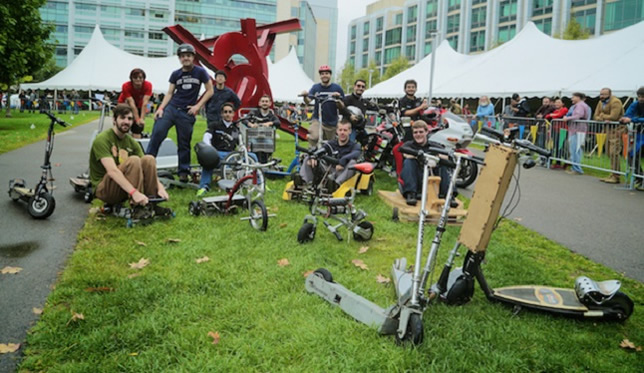
even a go-kart course that young attendees could use to take rides.
"What
you
see is that little extra bit of passion that compels us at MIT to stay
up
at night," said graduate student Jessica Artiles, one of the organizers.
About the Author
Michael Hart is a Los Angeles-based freelance writer and the former executive editor of THE Journal.