New Software Aims To Make Big Data Analysis Easier, Faster

Maplesoft has introduced a new version of its mathematical computing software that it says will enhance educators' ability to access, analyze and visualize data.

Company officials say a new version of its flagship software product, Maple 2015, will allow users to more freely access data from finance, economics and demographics, including macroeconomic data, statistics and complicated financial information.
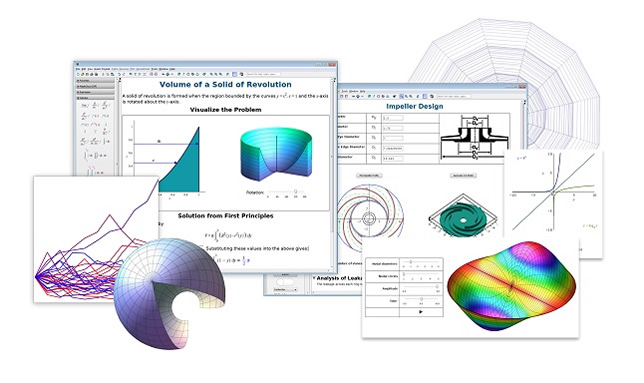
Maple 2015 will be able to make more advanced and sophisticated mathematical calculations than previous versions.

Advances in Maple's computation engine and interface include:

  • More customization that allows for application and content creation;
  • More advanced mathematical calculations that involve differential equations, group theory and physics, among others;
  • New math tools;
  • Expanded support for statistics education including new tutors and learning statistics; and
  • More online sharing of documents and interactive applications through the cloud.

"The new facilities for handling data sets make it easier to use Maple to examine important global trends and make sense of the reams of data that surround us," said Maplesoft Executive Vice President and Chief Scientist Laurent Bernardin. "Maple helps educators, students, scientists, engineers and researchers get their work done quickly and reliably."

Maple is available in several languages besides English, including French, Mandarin, Portuguese and Japanese.

About the Author

Michael Hart is a Los Angeles-based freelance writer and the former executive editor of THE Journal.

Featured

  • large group of college students sitting on an academic quad

    Student Readiness: Learning to Learn

    Melissa Loble, Instructure's chief academic officer, recommends a focus on 'readiness' as a broader concept as we try to understand how to build meaningful education experiences that can form a bridge from the university to the workplace. Here, we ask Loble what readiness is and how to offer students the ability to 'learn to learn'.

  • glowing brain above stacked coins

    The Higher Ed Playbook for AI Affordability

    Fulfilling the promise of AI in higher education does not require massive budgets or radical reinvention. By leveraging existing infrastructure, embracing edge and localized AI, collaborating across institutions, and embedding AI thoughtfully across the enterprise, universities can move from experimentation to impact.

  • row of digital padlocks

    2026 Cybersecurity Trends to Watch in Higher Education

    In an open call last month, we asked education and industry leaders for their predictions on the cybersecurity landscape for schools, districts, colleges, and universities in 2026. Here's what they told us.

  • Interface buttons of Generative AI tool

    Report: No Foolproof Method Exists for Detecting AI-Generated Media

    Microsoft has released a new research report warning that no single technology can reliably distinguish AI-generated content from authentic media, and that deepening reliance on any one method risks misleading the public.