New Wireless Interactive Display Eliminates Cabling
- By Dian Schaffhauser
- 06/17/15
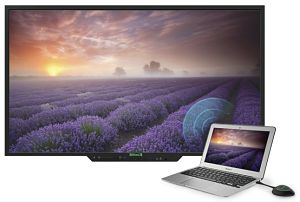 Start-up DisplayTen wants to stop educators and IT staff from having to crawl around under tables and desks to hook up monitor cabling to laptops. The company will be introducing a 70-inch wireless interactive display at the upcoming ISTE 2015 conference in Philadelphia later this month.
The DTen allows the user to plug a dongle into a USB port-enabled device to share its screen on the display. No pre-installation of software is required.
DTen's other features include the following:
- Finger or Bluetooth pen whiteboard writing;
- 10-touchpoint recognition;
- two-way control between the display screen and the digital device;
- an LED backlit display with a 1920 pixel x 1080 pixel resolution;
- ports for three VGA, three HDMI and three PC audio connections; and
- three USB 2.0 and one USB 3.0 plugs.
The display is priced at $6,999 for pre-orders received by August 2015.
About the Author
Dian Schaffhauser is a former senior contributing editor for 1105 Media's education publications THE Journal, Campus Technology and Spaces4Learning.