Savannah College of Art and Design Introduces AR-Trackable Catalog
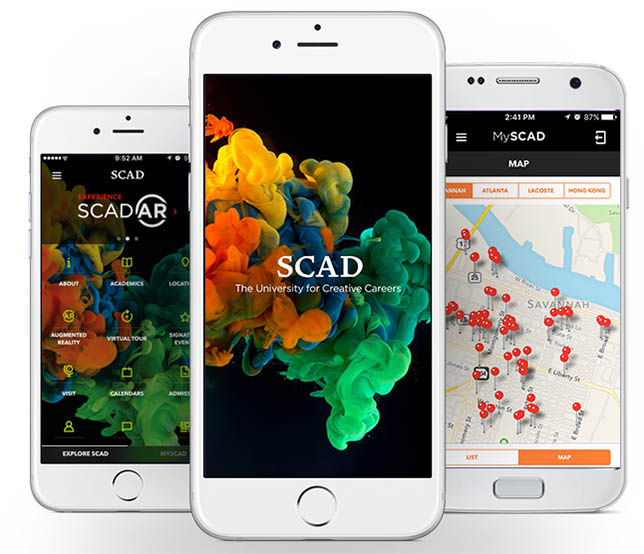
Image Credit: Savannah College of Art and Design.
To help prospective students and families learn about the institution before enrolling, the Savannah College of Art and Design (SCAD) has created a college catalog with augmented reality (AR) technology. The AR-driven catalog enables smartphone users to view videos of creative sessions, play student-designed video games, tour residence halls, learn about programs, explore at real-world careers, chat with admissions staff members and watch videos of annual campus events.
This is SCAD’s second innovation using immersive media. In 2015, SCAD used virtual reality (VR) to enhance acceptance letter packages, which contained customized Google cardboard VR goggles that enabled students to virtually visit SCAD’s global locations (in Savannah, Georgia; Hong Kong, China; Lacoste, France; and its online environment.)
The new catalog, produced and designed entirely by the university, offers:
- More than 85 trackable pages;
- 150-plus digital assets; and
- More than 200 micro-interactions.
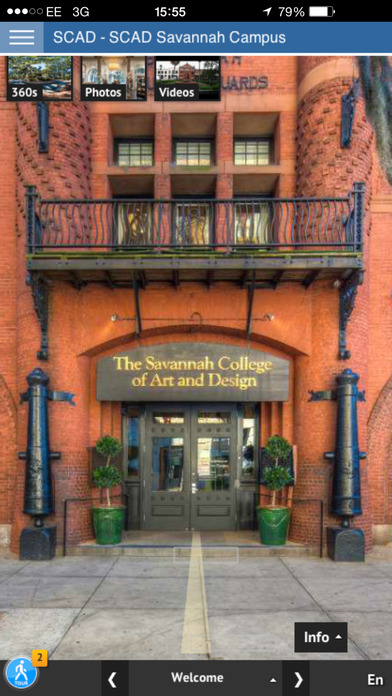
Image Credit: Savannah College of Art and Design.
Key features include:
- A self-guided tour that highlights campus landmarks, offering important information regarding programs as users approach buildings throughout the tour;
- Multimedia, including videos and photos; and
- A list of 360-degree interactive panoramas of various locations and buildings.
Within the first 12 months of using the AR catalog, the university has seen a 26 percent increase in admission applications, according to a news release.
“Through this personalized exploration, prospective students gain a firsthand experience of what awaits them at SCAD, including SCAD's award-winning degree programs in fashion, film, animation, architecture, interior design and more, as well as real-world collaborations with companies that include Disney, Google, Pixar, BMW and NASA through the SCAD Collaborative Learning Center,” according to the news release.
The AR-trackable catalog can be viewed through SCAD’s mobile app, available on the iOS App Store and Google Play Store.
About the Author
Sri Ravipati is Web producer for THE Journal and Campus Technology. She can be reached at [email protected].