UC Berkeley, Immerex to Open Lab for Ongoing VR, AR Research
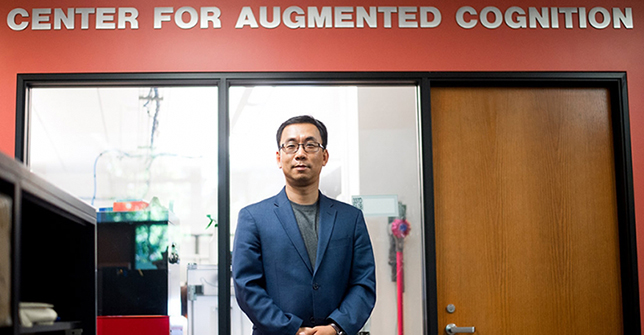
UCB's Center for Augmented Cognition, directed by Allen Yang (above), will outfit a new lab for research and student projects in augmented reality and virtual reality. Image Credit: Noah Berger.
The University of California, Berkeley has received a corporate gift from a nearby virtual reality company to open a new collaboration space dedicated to research in augmented and virtual reality (AR/VR), and to provide scholarships for students and faculty.

Image Credit: Immerex.
Bay Area-based Immerex provided an undisclosed gift amount and will outfit the Immerex Virtual Reality Lab, as it will be called, located in Cory Hall. It will be a space for faculty members, graduate and undergraduate students affiliated with the Center for Augmented Cognition, based in the College of Engineering, to develop projects using Immerex VR equipment, like VR head-mounted displays and cameras.
“The center supports Berkeley faculty and students in their research on human cognition modeling, human-computer interaction and human-robot collaboration through augmented and virtual reality technologies,” according to the announcement. Applications for such research range from creating content that trains doctors in live-saving techniques to bringing artists and audiences together for a virtual performance.
"In this new lab, we will be able to create synergies among Berkeley's various programs in AR/VR and connect researchers and students to Immerex's industry-leading technologies and channels in the emerging virtual reality global market," said Allen Yang, executive director of the Center for Augmented Cognition, in the statement.
To learn about projects and more, visit the Center for Augmented Cognition site.