South Carolina Offering Free Online Coding Courses for All Residents
- By Dian Schaffhauser
- 11/08/18
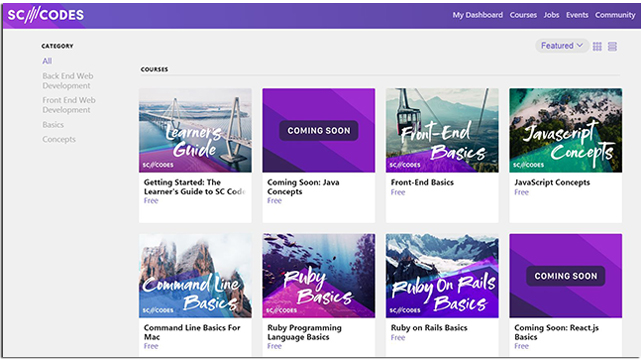
SC Codes' course catalog
South Carolina has introduced free coding education for all of its residents through an agreement between the state's Department of Commerce Office of Innovation and Build Carolina, a nonprofit that generates internships, apprenticeships and other education endeavors in innovative fields. "SC Codes," as the program is called, currently provides basic online courses for JavaScript, command line basics, Ruby, Ruby on Rails and, soon, Java and React.js.
Beyond the training, the SC Codes website connects students with industry mentors, local events for coders and job openings in tech-related fields.
The program began with a pilot in 2016. The learning platform was created and made available by the former leadership of a coding bootcamp operator, Iron Yard Academy, which has since closed down.
"The beauty of the platform is that anyone who wants to learn to code can access educational resources that are specific to the needs of employers right here in our state," said Lelia King, executive director of Build Carolina, in a statement. "South Carolina is leading the charge when it comes to removing barriers to technical education, which will have a direct impact on our workforce, our innovative employers and our economy."
The statewide effort is in response to a robust technology industry, which grew by about 2,520 jobs last year and contributed some $10.8 billion to South Carolina's economy, according to COMPTIA's Cyberstates 2018 analysis. Tech jobs in the state number about 82,500, and the tech industry employs 62,500, the report stated.
About the Author
Dian Schaffhauser is a former senior contributing editor for 1105 Media's education publications THE Journal, Campus Technology and Spaces4Learning.