Florida University's Hackathon Adds Crash Courses in Tech
- By Dian Schaffhauser
- 04/10/19
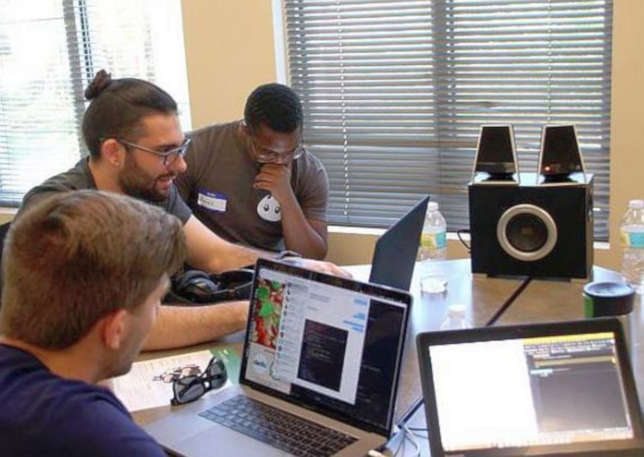
A Florida university's computer
club added a day of crash courses to its annual hackathon. Stetson
University's
HackerSpace recently hosted both college students and high schoolers,
who convened on the DeLand campus to participate in computer science
challenges, a gaming tournament and workshops.
"The
Greater
Central Florida Tech Faire + HatterHacks,"
as the event was called, took place beginning on Friday night, April
5, and ending Sunday afternoon on April 7. Over the course of about
45 hours, people learned how to build Node.js apps, work with
Blender, do penetration testing, produce actions for Google Assistant
and hear from tech experts, among other topics. Those who wanted an
extra dose of competitive intensity slid into teams created on the
spot to participate in a concurrent 24-hour hackathon.
The
goal of the event, according to the organizers, was to educate
students about STEM and computer science while also encouraging them
to pick up skills for creating technology. University faculty and
industry experts led the sessions.
"Hackathons
naturally encourage small communities to form in which students learn
from each other and work together to build sophisticated projects in
a single weekend," said Joshua Eckroth, an assistant professor
of CS at Stetson, in a statement.
"Computer science isn't as
scary as it seems from the outside," added Heyley Gatewood, a
math and computer science junior. "It's everywhere. We carry
technology in our backpacks and pockets and on our wrists. You can't
be afraid to take the first step, and you can't be afraid of
failure."
About the Author
Dian Schaffhauser is a former senior contributing editor for 1105 Media's education publications THE Journal, Campus Technology and Spaces4Learning.