Glue Collaboration Brings Virtual Groups Together in 3D
- By Dian Schaffhauser
- 04/06/20
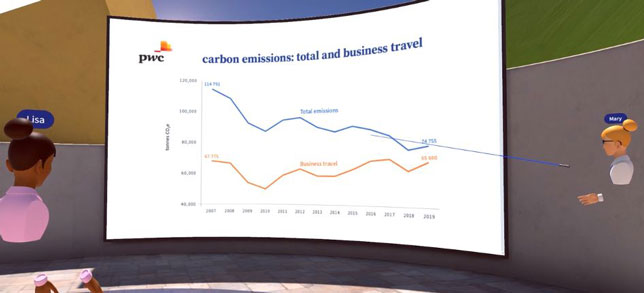
Glue Collaboration's virtual learning environment
A Nordic company has introduced a virtual reality collaboration platform. Glue Collaboration's software by the same name facilitates virtual environments where remote participants can come together to learn, share, plan and create as if they were in the same physical space.
Users enter 3D customizable virtual spaces equipped with co-creation tools, including a whiteboard, note-taking, 3D draw, a camera and a laser pointer. The software works on numerous VR headsets, including HTC Vive, Oculus Rift and Quest and Microsoft Mixed Reality headsets, including the HoloLens.
The program can be used by an individual in asynchronous mode or simultaneously by a team of people.
The current release of the program includes a virtual touch interface for performing project tasks; "Team Files," a file-sharing system for sharing presentations, 3D models and images; a set of virtual spaces for meetings, including "Project Garden," "Lake Cubic" and "Clarity Island"; and extended keyboard character support and new supported languages.
"The need for remote collaboration tools that truly emulate the experience of being face-to-face with others has never been greater," said Jussi Havu, CEO of Glue, in a statement. "Traditional audio and videoconferencing tools fall short in providing such an experience as they lack true human presence and effective co-creation tools."
Two-week trials are available from the company.
About the Author
Dian Schaffhauser is a former senior contributing editor for 1105 Media's education publications THE Journal, Campus Technology and Spaces4Learning.