Zoom Intros Home Videoconferencing Appliance
- By Dian Schaffhauser
- 07/28/20
Zoom
Video Communications has announced a new device specifically designed for home videoconferencing. But at
least one analyst suspects the price may keep buyers at by. In
mid-July Zoom announced it would be taking pre-orders for Zoom
for Home,
a dedicated appliance for allowing employees to meet and collaborate
online. Currently, the device is available for
pre-order.
Zoom
is working with DTEN
Solutions,
which already offers a 55-inch
"Zoom room appliance."
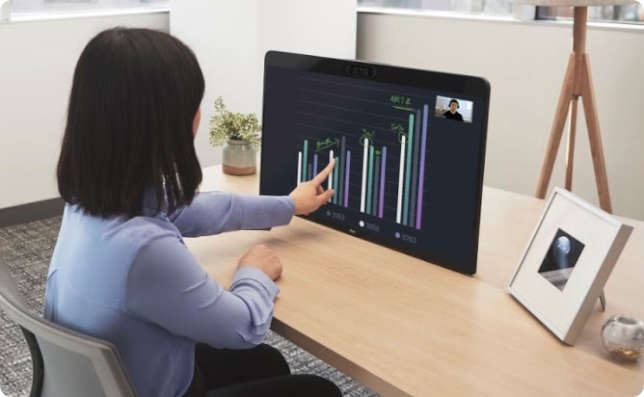
Zoom for Home will be a 27-inch touch display with three built-in
wide-angle cameras for high-resolution video and an eight-microphone
array for clear audio. It will include functionality for screen
sharing, whiteboarding, annotating and "ideation."
According to Zoom, the device will work out of the box and will
connect for anybody with a Zoom Meeting license.
Zoom
for Home will sync with the user's calendar, status, meeting settings
and phone and can be set up for remote IT management through the
Admin Portal or self-managed by the user. The company said the device
would be compatible with other Zoom
Room Appliances,
including systems from Neat
and Poly
that are intended for group meeting settings.
The
timing isn't surprising. Pre-pandemic, 11 percent of people worked
from home. But a June
survey by IBM
found that four in five employees (81 percent) would prefer to
continue working remotely "at least some of the time."
Three in five (61 percent) would like telecommuting to become their
"primary way of working."
IDC
Senior Research Analyst Rich Costello observed that these types of
dedicated devices help can people "feel set up for success."
Just a few months ago, he noted in a press release, the job was to
make sure employees had the right ergonomic setup. "We've now
moved to the phase of making sure employees have the right devices to
enable productivity. The Zoom from Home category is a powerful way
for the company to reach a work-from-home audience that craves tools
to help with engagement, connection and collaboration."
However,
GlobalData
Principal Analyst David Bicknell suggested that the popularity of the
product "may be held back by the price tag. At $600, it is more
than double the price of similar consumer solutions," including
the Amazon
Echo Show
($230), Facebook
Portal
(from $129) and Google
Nest Hub Max
(from $229).
Another
issue, Bicknell said, was whether people wanted more dedicated
work communications equipment taking up space in their home. "A dedicated videoconferencing device might be an
unwelcome reminder for some that they're already working far too
much," he noted.
About the Author
Dian Schaffhauser is a former senior contributing editor for 1105 Media's education publications THE Journal, Campus Technology and Spaces4Learning.