Stony Brook Launches Campus COVID-19 Digital Archive Project
- By Dian Schaffhauser
- 09/14/20
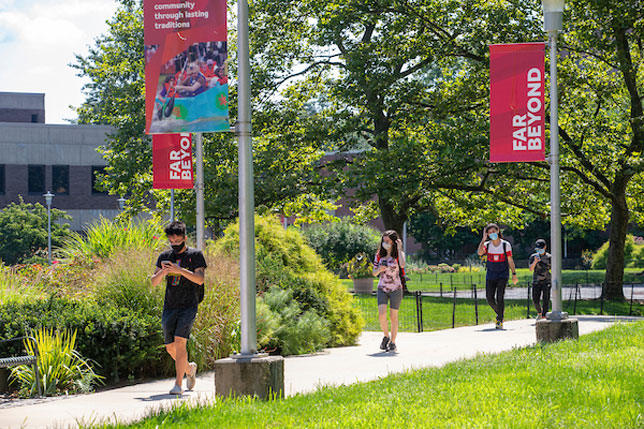
Stony Brook students wearing masks and social distancing on the first day of the fall 2020 semester. (Photo: Stony Brook University)
New medical protocols for the treatment of COVID-19. Medical students who chose to graduate two months early so they could be deployed on the front lines at university hospitals to help care for a growing number of patients. The use of campus 3D printers to make face shields. The use of campus chemistry labs to produce hand sanitizer for hospital workers. These are some of the ways that members of New York's Stony Brook University have responded to the pandemic.
Now, university librarians want to capture people's experiences. "Documenting COVID-19: Stony Brook University Experiences" is a new digital archive project set up to "collect, preserve and publish" the history of the institution "during this unprecedented moment in history."
According to Kristen Nyitray, university archivist and director of special collections and university archives in the Stony Brook Libraries, the project will collect submissions from students, faculty, staff and alumni "that document life during the COVID-19 pandemic." As she noted in a statement, "Interviews, first-hand accounts, flyers, photographs and more will be important sources to consult in the future to study, interpret and derive meaning from this historical time period."
The project's website invites participants to share stories and images about their lives during the ongoing pandemic, to be interviewed for an oral history project or to "upload digital items that represent and document the SBU experience during the COVID-19 pandemic."
An FAQ explained that uploads could include:
- Digital photographs of daily life;
- Personal stories;
- Journal entries;
- Screenshots of social media posts;
- Short videos;
- Links to webpages or online resources;
- Coursework or research projects;
- Literary and creative works; and
- Descriptions of remote learning experience or how classes changed when they went virtual.
The materials collected will be reviewed. Those items that are chosen for inclusion in the archive will be made accessible through the libraries' institutional repository and/or the university archives, a repository of university historical materials.
Organizers said they would also develop a timeline record of the events and activities at Stony Brook and create an online exhibition.
About the Author
Dian Schaffhauser is a former senior contributing editor for 1105 Media's education publications THE Journal, Campus Technology and Spaces4Learning.