Library of Congress Digitizes Presidential Collections
- By Dian Schaffhauser
- 01/08/21
The
world's largest library, the Library
of Congress,
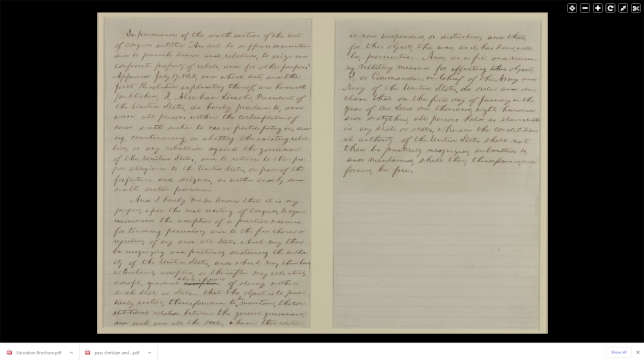
has digitized of the collections of papers from 23 early
presidents, from George Washington to Calvin Coolidge. The work has
taken nearly two decades of effort, and the results -- 3.3 million
images -- are openly available online. Along with images showing the
original documents, the collection also provides text versions of the
contents as well as descriptive information to provide context.
The
collection for Abraham
Lincoln
consists of 20,200 items, including his first and second inaugural
addresses and a preliminary draft of the Emancipation Proclamation.
For George
Washington,
there are 77,000 items, mostly diaries, financial and military
records and letters. Thomas Jefferson left behind 25,000 items,
primarily correspondence but also drafts of the Declaration of
Independence.
The
various items were acquired, according to the Library, through a
combination of donation and purchase. In 1957, Congress passed a law
directing the Library to "arrange, index and microfilm the
papers," a project that was completed in 1976. With the advent
of digitization, presidential papers became a ripe candidate for that
too.
"The
writings and records of America's presidents are an invaluable source
of information on world events, and many of these collections are the
primary sources for books and films that teach us about our nation's
history," said Librarian of Congress, Carla Hayden, in a
statement "We are proud to make these presidential papers
available free of charge to even more researchers, students and
curious visitors online."
"Arguably,
no other body of material in the Manuscript
Division
is of greater significance for the study of American history than the
presidential collections," added Janice Ruth, who runs the
Division at the Library. "They cover the entire sweep of
American history from the nation's founding through the first decade
after World War I, including periods of prosperity and depression,
war and peace, unity of purpose and political and civil strife."
The
collections of items for presidents who followed Coolidge, from
Howard Hoover onward, are maintained in presidential libraries, which
are administered by the National
Archives and Records Administration.
Some are held elsewhere; for instance, the papers of John Adams and
John Quincy Adams are housed at the Massachusetts
Historical Society,
much of which has also been digitized.
Links
to each collection are available in
a Library of Congress news announcement.
About the Author
Dian Schaffhauser is a former senior contributing editor for 1105 Media's education publications THE Journal, Campus Technology and Spaces4Learning.