James Madison Adopts Online Commons
- By Dian Schaffhauser
- 01/13/22
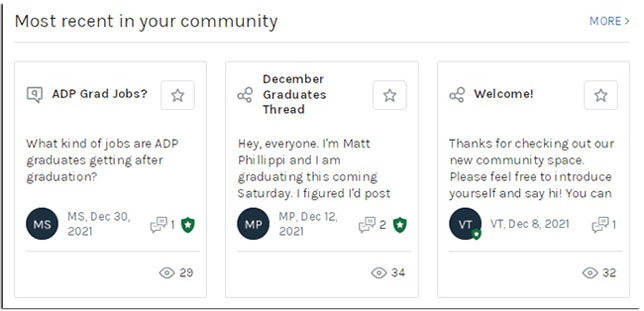
Discussions in JMU's digital commons
James Madison University has embedded a digital commons in its website, to better support students in continuing education programs. The institution has adopted software from InScribe, which sets up Q&A communities in online destinations where people already congregate, such as the learning management system.
In the case of James Madison, InScribe's software shows up on the public website and also in Canvas, for use by students enrolled in the institution's School of Professional & Continuing Education.
The goal is to offer more interactivity among students and university staffers, increase student engagement and give participants ways to find help and resources, share ideas and connect with one another.
"At JMU, we believe that access to support and community should not be limited by proximity to campus. We strive to ensure every student — whether in person or online — feels as though they belong and has the opportunity to connect and collaborate," said the school's Dean, Melissa Lubin, in a statement. "JMU students are each other's biggest fans, and we know that the relationships they will form in these digital spaces will help fuel their success."
"We are excited to be a part of JMU's mission to support pathways for degree completion for non-traditional learners so they can continue to progress in their careers," added Katy Kappler, CEO of InScribe. "Digital communities not only facilitate connection and create a sense of belonging, they also give students another avenue to collaborate, a skill that JMU emphasizes and one that can strengthen a student's workforce readiness and on-the-job performance."
InScribe has also been used at Kentucky State University, Kansas' Fort Hays State University and the University of St. Thomas in Minnesota, among other institutions.
About the Author
Dian Schaffhauser is a former senior contributing editor for 1105 Media's education publications THE Journal, Campus Technology and Spaces4Learning.