Southern New Hampshire University President Paul J. LeBlanc to Step Down
- By Kate Lucariello
- 12/13/23
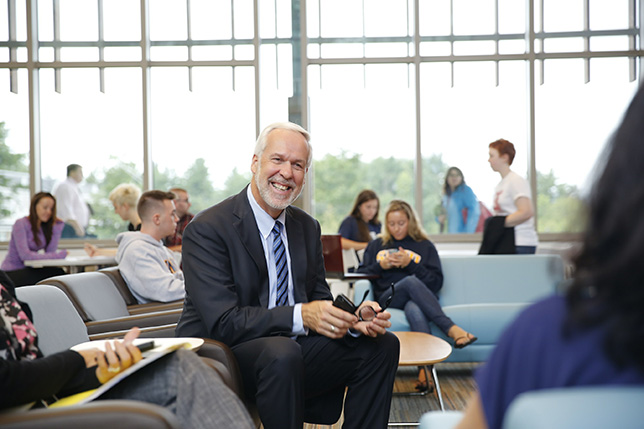
Photo courtesy of Southern New Hampshire University
After 20 years of leadership, President and CEO Paul J. LeBlanc of Southern New Hampshire University (SNHU) has announced he will step down as of July 1, 2024. His tenure has taken the institution from a small regional university serving 2,500 students to more than 225,000 learners, the largest nonprofit higher education institution in the country.
LeBlanc is known as an innovator, helping SNHU to launch several initiatives to reach underserved learners worldwide. Some of those highlights include:
- The first competency-based education (CBE) model approved for federal funding by the Department of Education;
- The Global Education Movement (GEM), serving refugees and displaced learners in Africa and the Middle East;
- A reinvented academic and financial model, restricting all campus tuition programs at $15,000 or $10,000 annually to make them more affordable, accessible, and flexible; and
- Many local initiatives, serving the community in various ways.
As a result, LeBlanc and SNHU have received many accolades for innovation.
"Reflecting on the past 20 years, I'm most proud of SNHU's culture of kindness, support, and a willingness to work together and learn which permeates the university," LeBlanc said. "The student-first approach in everything we do doesn't need to be taught, it's at the center of every decision at every level of the organization."
The university has named Provost Lisa Marsh Ryerson as his replacement for a two-year term. Over the coming months, the two will work together to ensure a smooth transition.
"It has been my privilege to serve as university provost, and I'm deeply honored to step into the role of president next July," Ryerson said. "Paul's legacy is one of bold vision and generosity of spirit. He has guided this institution through immense growth and has led us in building a culture dedicated to student success — our proudest tradition."
LeBlanc may be stepping down from the university, but he will continue with academic pursuits, he said. He is the author of two books, Students First: Access, Equity, and Opportunity in Higher Education, published by Harvard Education Press in 2021; and Broken: How Our Social Systems are Failing Us and How We Can Fix Them, published in 2022. He intends to research and write about AI and its impact on the workforce.
About the Author
Kate Lucariello is a former newspaper editor, EAST Lab high school teacher and college English teacher.