ePortfolios - Fashion Institute of Technology
- By Mary Grush, Matt Villano
- 07/28/09
At Fashion Institute of Technology (NY), a key part of the admissions process is the review of a prospective student’s collection of art-related work, be it fashion apparel, illustration, photography, fine arts, computer graphics, jewelry, or other pieces. In the past, FIT applicants were required to bring in or send physical copies of their portfolios to the school’s Admissions office. Faculty members often would need to come to school on weekends to evaluate the portfolios—a lengthy process—and students’ materials would never be returned. Some applicants also had to visit the school for interviews and face-to-face assessments.
Thanks to the implementation of a new Admissions ePortfolio system in early 2008, however, applicants now can submit their work over the internet. The system sends an e-mail acknowledgment of receipt of the portfolio to the applicant, provides for online evaluation and grading by faculty, and updates applicants’ records in the school’s SunGard Banner student information system, all electronically.
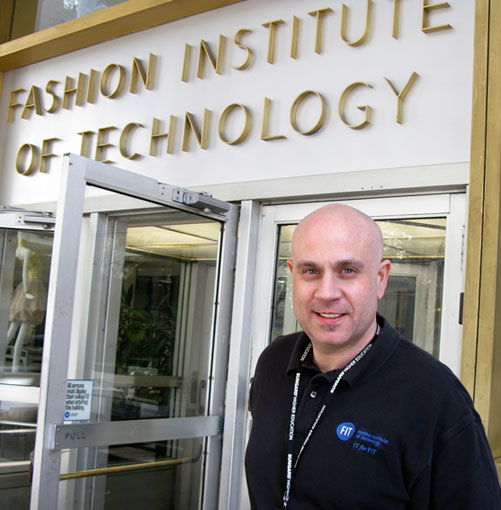
“There are other colleges that have electronic portfolio systems for their applicant or student constituents, but they are mostly used to display and showcase their students’ collections of work and accomplishments,” says project lead Reuben Marcus, FIT’s manager of portal and web services. FIT’s ePortfolio system is not designed to display or showcase an applicant’s work, but rather to operate as a seamless, automated system whereby prospective students can have their work accepted, reviewed, evaluated, and graded in minimum time, streamlining the admissions process.
FIT’s ePortfolio-based admissions process has saved big bucks in utilities costs as well as faculty and staff compensation. The system runs on the Xythos Web File System Platform (Xythos has since been acquired by Blackboard), and integrates with content management technology from SunGard as well as the school’s student information system. Oracle’s Application Server 10g runs the Xythos back-end database, the ePortfolio application runs on Sun servers, and external storage for the ePortfolios is handled by an IBM DS4200 disk storage system.
Behind the scenes, the initiative was a collaborative effort involving individuals from various departments, including: Marcus, Joseph Lucca, Alison O’Connor, Ellen Medins, Judith Duncan-Allen, Sandra Braxton, Subah Sachdeva, Deborah Golopol, Noreen Kentish, Angus Dickson, Mona Patel, Bryan Gucwa, Andrew Lacoff, Gregg Chottiner, Van Buren Winston, Joanne Arbuckle, and Erika Muhammad, as well as team members from Technology Development, Communication Design, Fashion Design, Photography, and Admissions. (A full list of project team members and their respective departments can be found at www3.fitnyc.edu/eportfolioteammembers.)
During the project’s beta rollout, about 300 applicants logged on to the new system; a total of 125 of them actually submitted their portfolios online. As expected, the technology has transformed admissions to the School of Art and Design, making the process quicker, more traceable, and more efficient. The program also has saved the institution big bucks, both in utilities costs and in compensation expense for faculty and administrative staff who no longer need to work overtime to evaluate portfolios. Of course, the system saves prospective students money in packaging and postage, and since some no longer have to fly to New York City for face-to-face interviews and in-person portfolio assessments, transportation and lodging savings are significant as well.
FIT’s burgeoning ePortfolio program currently is in release phase and is operational for three majors: Fashion Design, Communication Design, and Photography. Eventually, Marcus says FIT plans to expand the program and roll it out to all 14 majors at the school.
About the Authors
Mary Grush is Editor and Conference Program Director, Campus Technology.
Matt Villano is senior contributing editor of this publication.